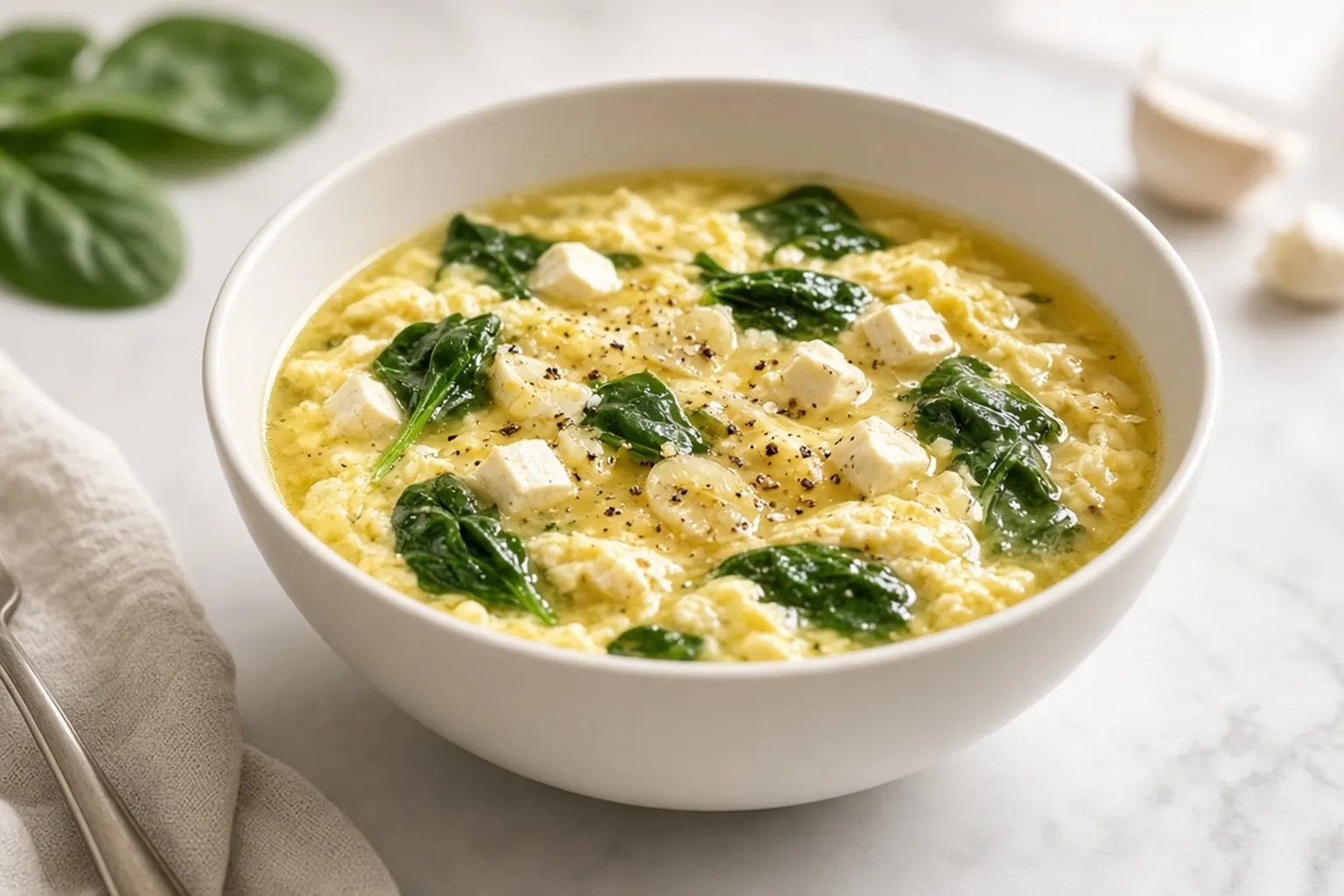
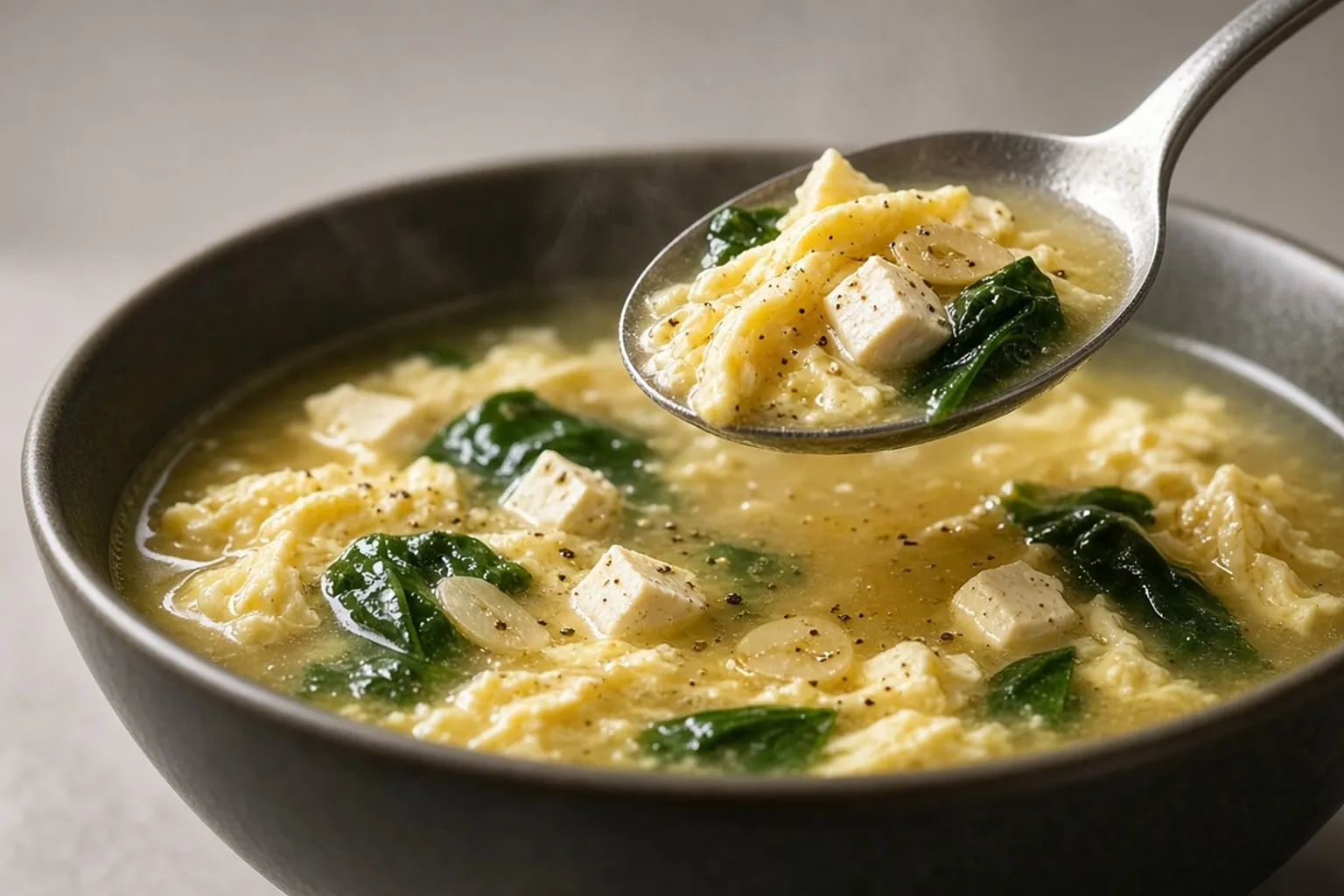
Vegetarian stracciatella (Italian egg-drop soup) with tofu and spinach
The vegetarian take on Rome's egg-drop soup: a garlicky vegetable broth with soft ribbons of egg and parmesan-style cheese stirred through, tender cubes of tofu and wilted baby spinach, a grating of nutmeg and a squeeze of lemon. Ten minutes from cold pan to bowl.
- Time
- 10 min (3 prep + 7 cook)
- Servings
- 2
- Per serving
- 377 kcal
- Protein
- 31 g
Ingredients
- 2 tsp olive oil
- 2 cloves garlic, thinly sliced
- 3 cups vegetable broth, a broth or stock cube labelled vegetarian
- 9 oz firm tofu, in 1.5 cm (1/2 inch) cubes
- 4 cups baby spinach


Egg and cheese
- 3 large eggs
- 1/3 cup finely grated parmesan, a vegetarian hard Italian-style cheese (Parmigiano-Reggiano is always made with animal rennet)
- a pinch nutmeg
- 1/2 tsp black pepper


- 2 tsp lemon juice

Steps
- Warm the oil in a medium saucepan over medium heat and fry the garlic for 1 minute without letting it brown. Pour in the broth, turn the heat up and bring it to a boil.
- Add the tofu and spinach and simmer 1 minute, until the spinach has wilted. Meanwhile beat the eggs with the cheese, nutmeg and pepper in a jug.
- Turn the heat down so the soup barely simmers. Pour in the egg mixture in a thin stream while you stir slowly with a fork, then leave it 30 seconds: the egg sets into soft ribbons.
- Take the pan off the heat, stir in the lemon juice and ladle into two deep bowls.
Good to know
Why are my egg ribbons tiny?
The soup was boiling hard, or it was stirred too fast. Keep it at a bare simmer and stir slowly in one direction for long, soft ribbons.
Can I add more greens?
Yes, a handful of chopped kale or chard goes in with the broth and needs 3 minutes to soften; frozen peas are traditional too but take it out of keto.
Alternative

Per
- Calories
- 61
- Protein
- (32%)
- 5 g
- Fat
- (58%)
- 4 g
- Carbohydrates
- (10%)
- 2 g
- of which sugar
- 1 g
- Fiber
- <1 g
- Sodium
- 219 mg
More meals


Computed from the ingredients with our published formula, not yet kitchen-tested. How
As written, 755 kcal goes into the pot and 1287 g of ingredients comes out as about 1230 g of food: 61 kcal per 100 g. Cooking moves water and energy density is the score's biggest lever, so the dish is scored as cooked, not as an average of its parts. Every ingredient links to its food page, with the same data and score. The label's percentages are each macronutrient's share of the calories. The full formula.