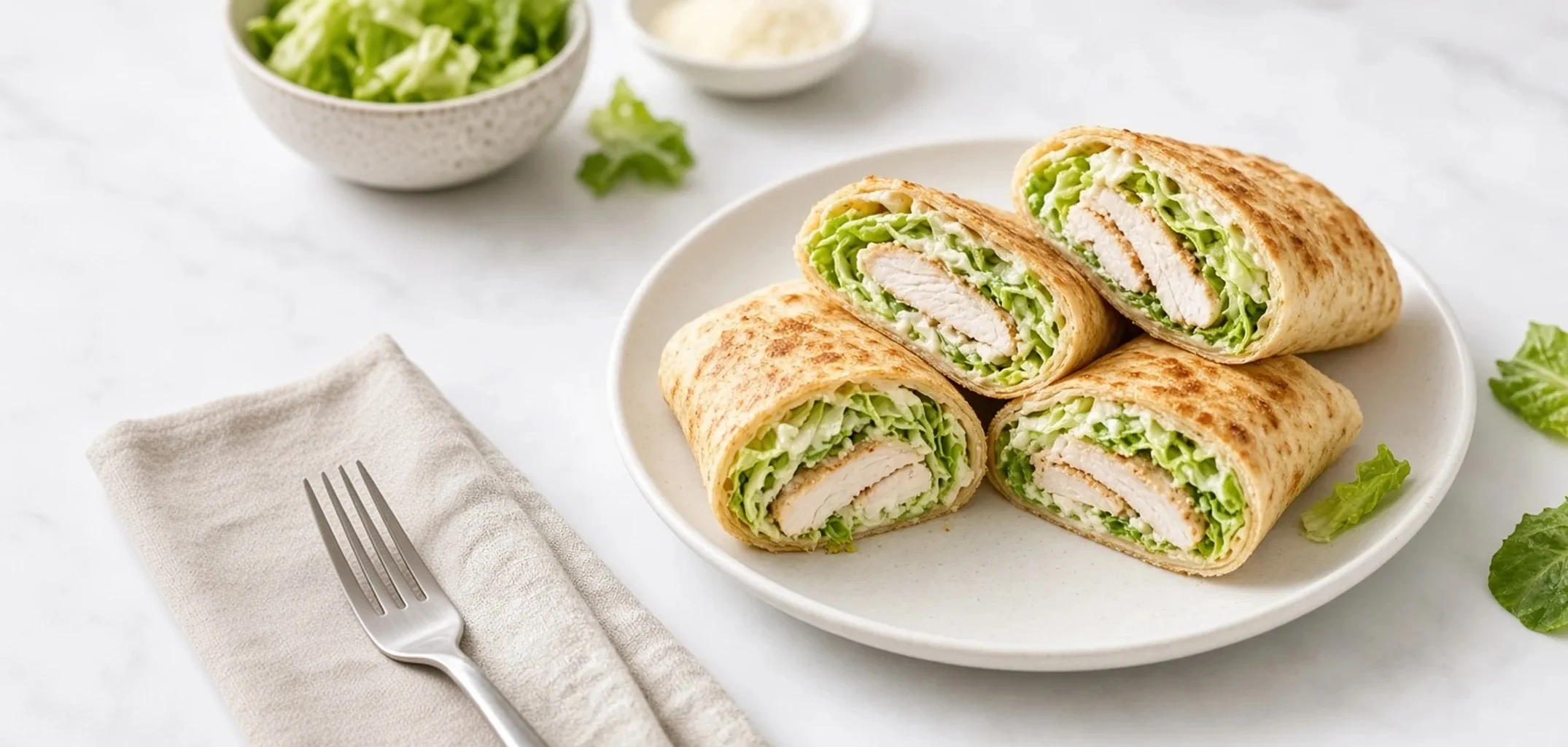
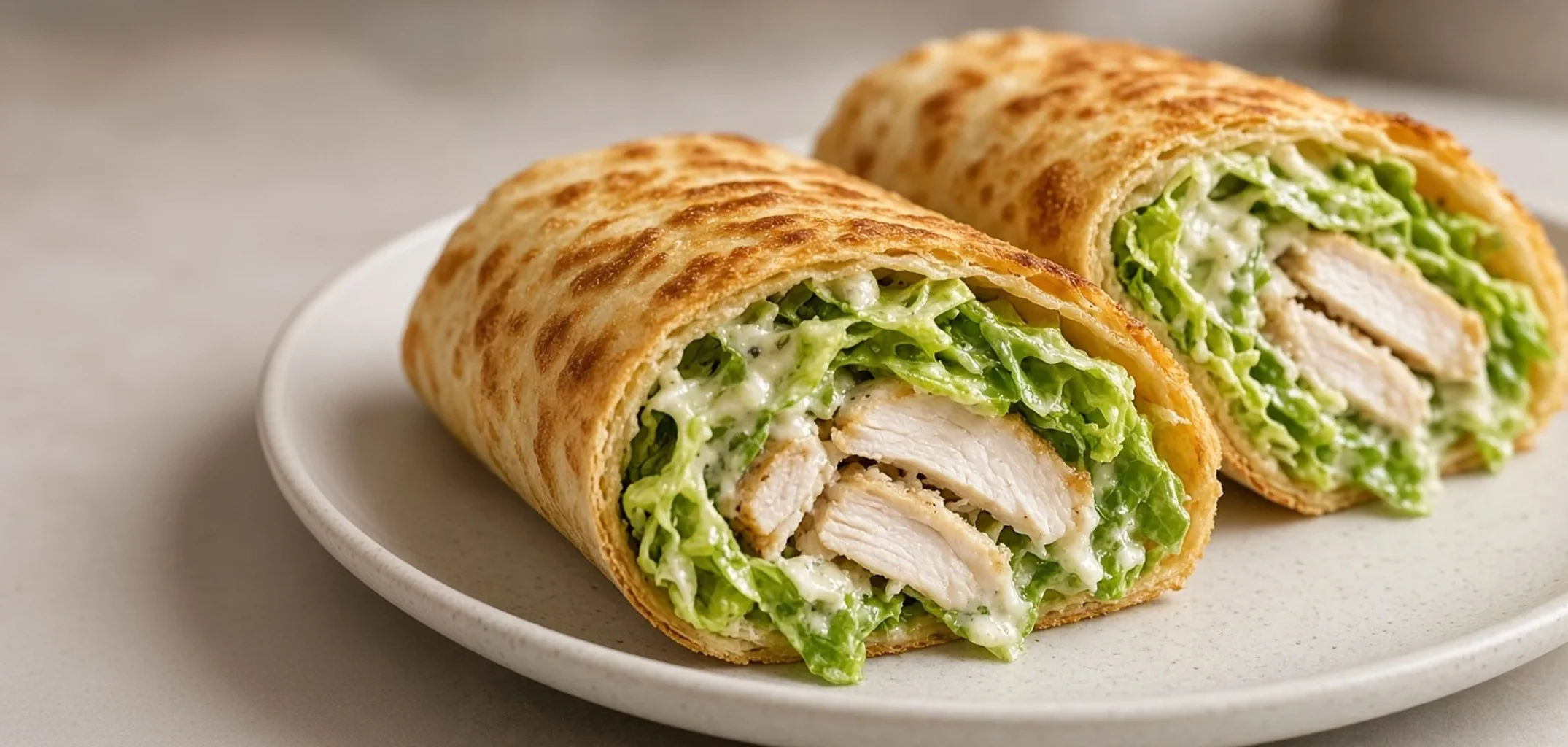
Chicken Caesar wraps on cottage cheese flatbread
50 min · 58 g protein · 447 cals / serving
Two golden, bendy flatbreads made from nothing but blended cottage cheese, eggs and parmesan, rolled around sliced chicken and crisp romaine in a garlicky yogurt Caesar dressing. The viral two-ingredient wrap with its most popular filling, and almost all protein.
Ingredients
Flatbread
- 1 cup cottage cheese (2%)
- 2 large eggs
- 3 tbsp grated parmesan
- 1/2 tsp Italian seasoning


Caesar dressing
- 1/4 cup nonfat Greek yogurt
- 2 tbsp grated parmesan
- 2 tsp lemon juice
- 1 tsp olive oil
- 1 tsp anchovy paste
- 1 tsp Dijon mustard
- 1/2 clove garlic, finely grated
- 1/4 tsp black pepper


- 7 oz roasted chicken breast, cooked chicken breast, sliced: rotisserie or leftover
- 2 cups shredded romaine lettuce


Steps
- Heat the oven to 350°F and line two baking sheets with baking paper (brush the paper lightly with oil if it is not non-stick).
- Blend the cottage cheese, eggs, parmesan and Italian seasoning until completely smooth and runny, about 30 seconds. Pour half onto each sheet and spread into a thin round about 23 cm (9 in) across.
- Bake for 30 to 35 minutes, until the flatbreads are dry to the touch and golden at the edges. Cool 5 minutes, then peel them off the paper; they turn bendy as they cool.
- Whisk the yogurt, parmesan, lemon juice, olive oil, anchovy paste, Dijon, garlic and pepper into a thick dressing.
- Toss the chicken and romaine with the dressing. Pile half down the middle of each flatbread, roll it up tightly and cut it in half on the diagonal.
Good to know
Can I make the flatbreads ahead?
Yes. Stack them between baking paper and keep them in the fridge for 3 days; warm each one for 20 seconds in a dry pan so it rolls without cracking. Fill them just before eating.
Can I use a bottled Caesar dressing?
Yes, 3 tablespoons of a regular creamy Caesar instead of the yogurt dressing, at about 57 instead of 73.
Per
- Calories
- 136
- Protein
- (54%)
- 18 g
- Fat
- (37%)
- 5 g
- Carbohydrates
- (10%)
- 3 g
- of which sugar
- 2 g
- Fiber
- <1 g
- Sodium
- 279 mg
More meals


Computed from the ingredients with our published formula, not yet kitchen-tested. General guidance, not medical advice. Talk to your prescriber. How
As written, 895 kcal goes into the pot and 743 g of ingredients comes out as about 657 g of food: 136 kcal per 100 g. Cooking moves water and energy density is the score's biggest lever, so the dish is scored as cooked, not as an average of its parts. Every ingredient links to its food page, with the same data and score. The label's percentages are each macronutrient's share of the calories. The full formula.