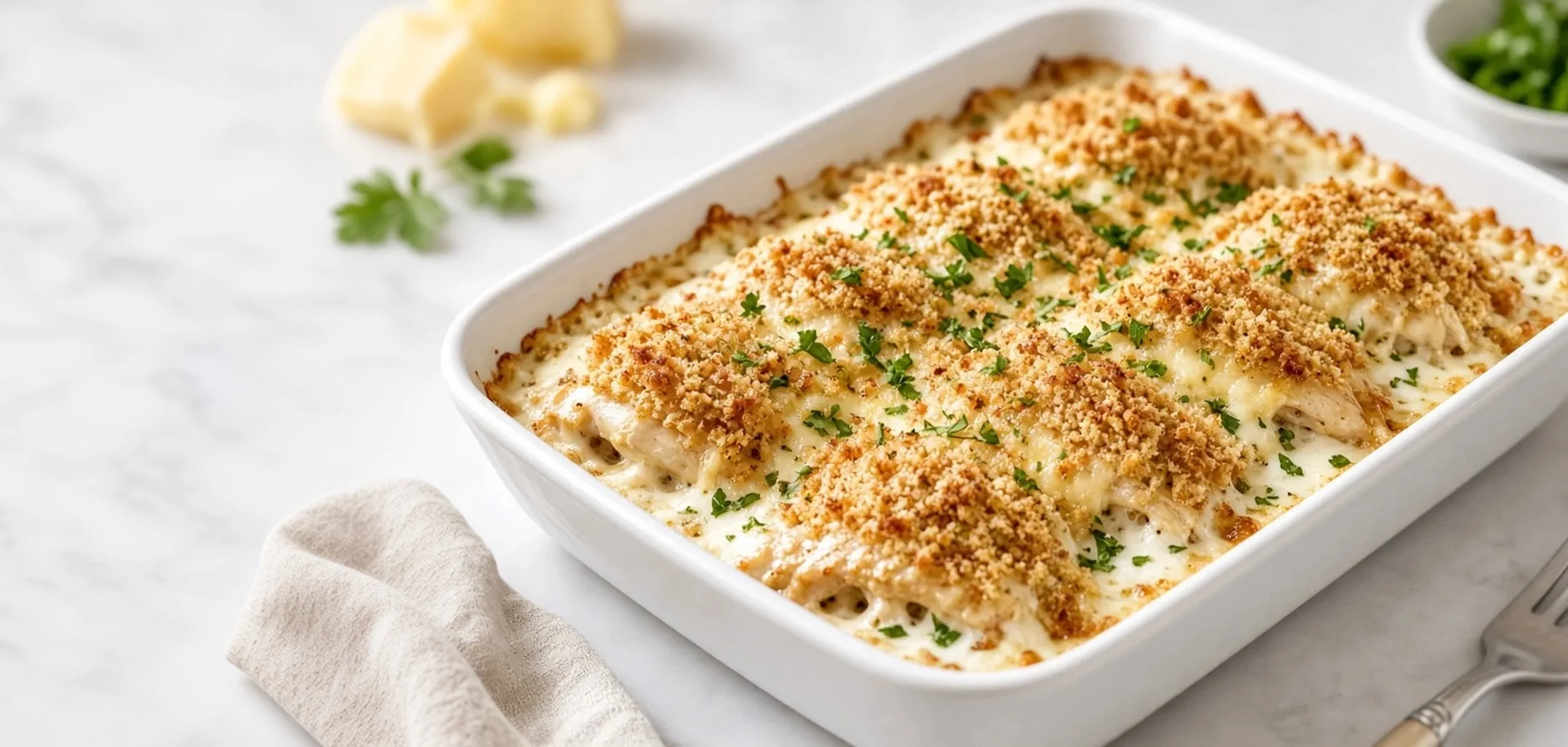
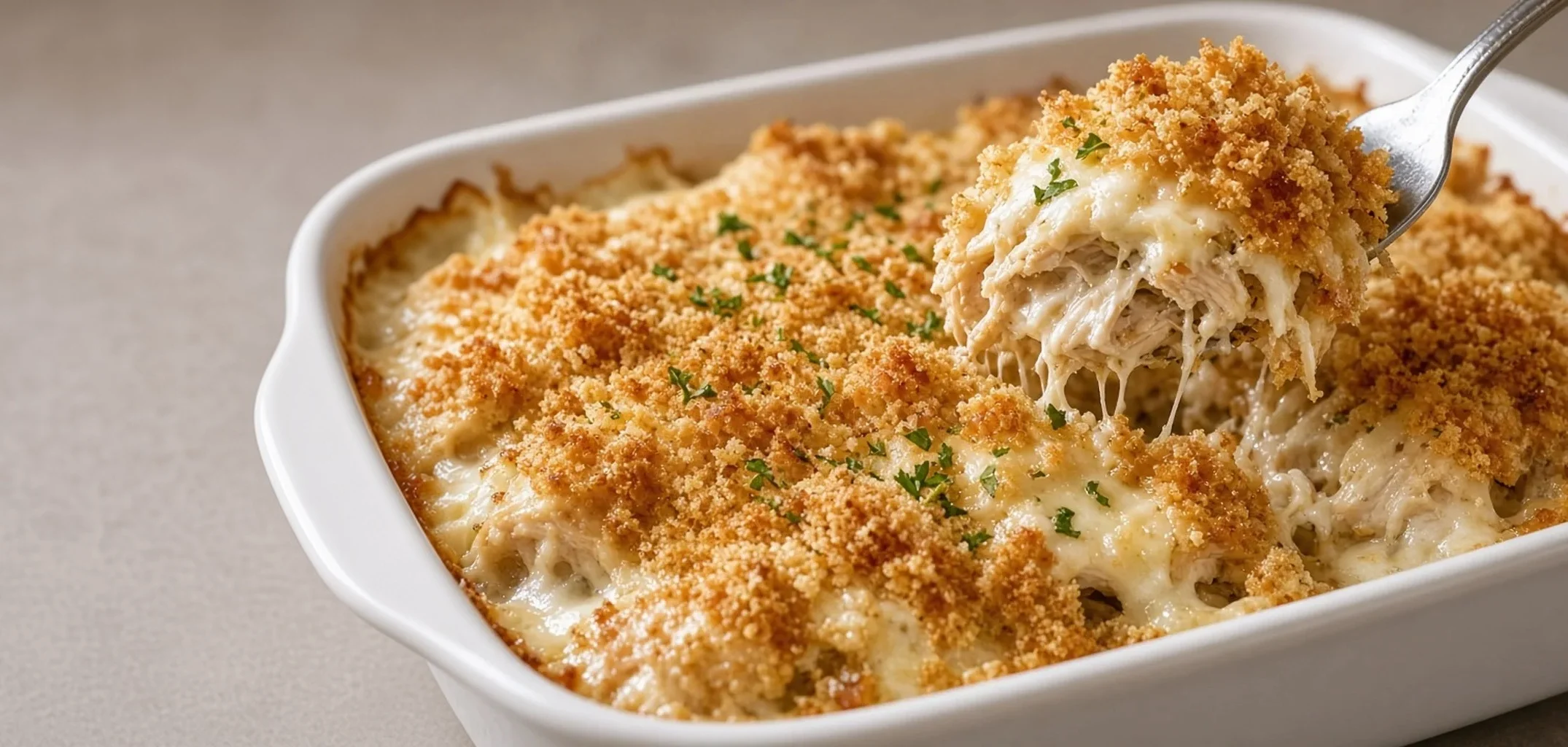
Keto Swiss chicken casserole
60 min · 72 g protein · 505 cals / serving
Tender chicken breasts baked in a creamy garlic and thyme sauce under melted Swiss cheese and a crisp, golden parmesan crumb: the potluck classic, with the stuffing topping swapped for one that stays crunchy without any bread.
Ingredients
- 2 lb (4 breasts) chicken breast, roasted, each halved into 2 thinner pieces
- 2/3 tsp salt
- 1/2 tsp black pepper


Sauce
- 3 oz light cream cheese, softened
- 2/3 cup nonfat Greek yogurt
- 1/3 cup chicken broth
- 1 tsp Dijon mustard
- 1 tsp garlic powder
- 1 tsp dried thyme


- 6 slices reduced fat Swiss cheese

Topping
- 2/3 cup finely crushed pork rinds
- 1/3 cup grated parmesan
- 1 tbsp butter, melted


- 1 tbsp fresh parsley, chopped (optional)

Steps
- Heat the oven to 375°F. Season the chicken pieces with the salt and pepper and lay them in one layer in a 23 × 33 cm (9 × 13 in) baking dish.
- Whisk the cream cheese, yogurt, broth, Dijon, garlic powder and thyme until smooth, and spoon it evenly over the chicken.
- Lay the Swiss cheese slices over the sauce, tearing them to cover the chicken.
- Stir the crushed pork rinds, parmesan and melted butter together and scatter it over the cheese. Bake 30–35 minutes, until the topping is crisp and golden, the sauce bubbles and the chicken reaches 165°F in the thickest piece.
- Rest 5 minutes, scatter with parsley and serve with spoonfuls of the sauce. Keeps 3 days in the fridge; reheat covered at 350°F so the chicken stays juicy.
Good to know
No pork rinds?
Use the same weight of almond flour mixed with the parmesan and butter. It browns well and stays a little softer than the pork rinds.
Can I use regular Swiss cheese?
Yes. It melts a little more smoothly and tastes richer, at a score of about 70 instead of 79.
Per
- Calories
- 171
- Protein
- (59%)
- 24 g
- Fat
- (37%)
- 7 g
- Carbohydrates
- (4%)
- 2 g
- of which sugar
- 1 g
- Fiber
- <1 g
- Sodium
- 359 mg
More meals


Computed from the ingredients with our published formula, not yet kitchen-tested. How
As written, 2019 kcal goes into the pot and 1418 g of ingredients comes out as about 1180 g of food: 171 kcal per 100 g. Cooking moves water and energy density is the score's biggest lever, so the dish is scored as cooked, not as an average of its parts. Every ingredient links to its food page, with the same data and score. The label's percentages are each macronutrient's share of the calories. The full formula.