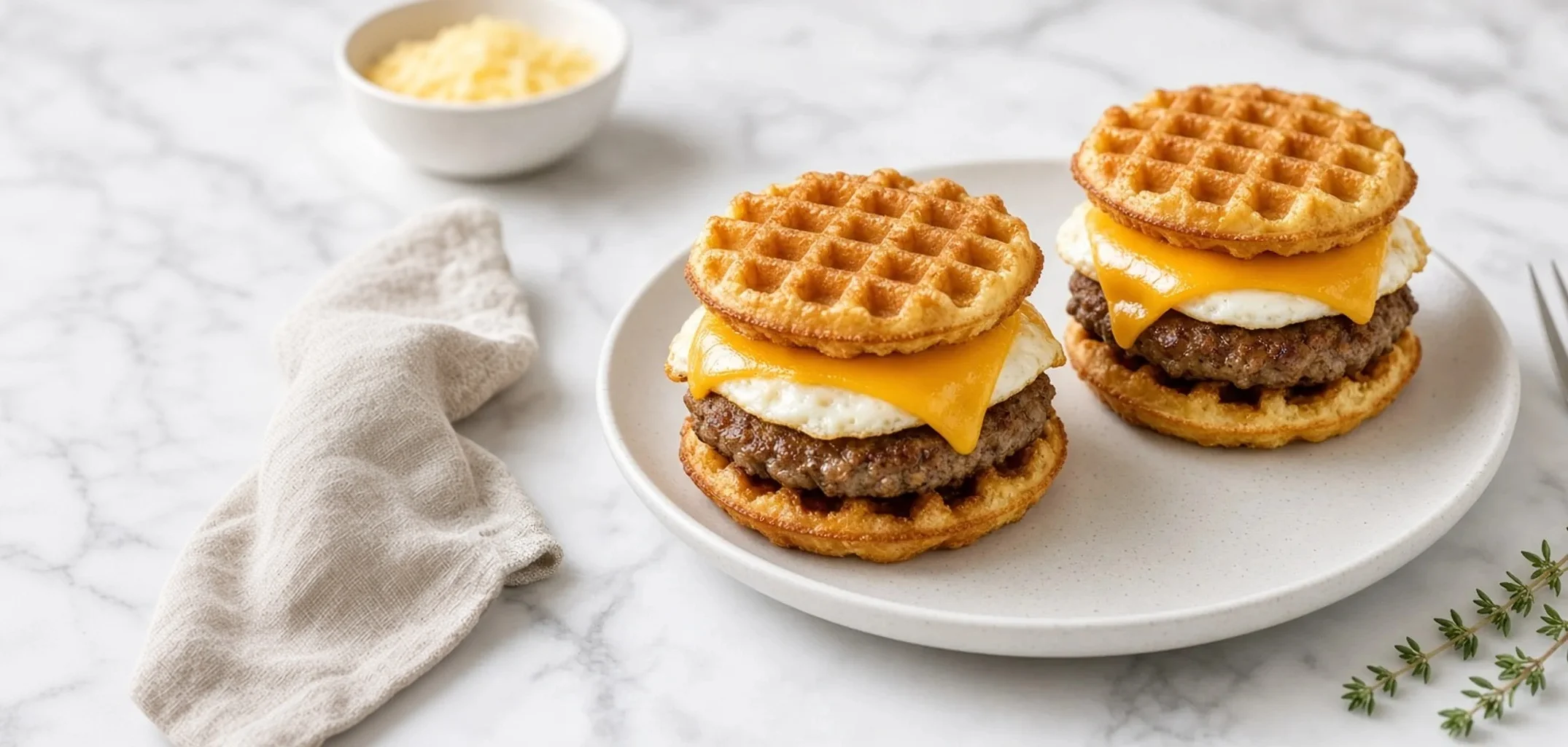
Maple chaffle sandwiches with sausage, egg and cheese
25 min · 43 g protein · 527 cals / serving
Maple-scented, griddle-style chaffles make this sweet-and-savory drive-through breakfast at home: two crisp chaffles hug a sage sausage patty, a just-set fried egg and melting cheddar. The chaffles are just egg, mozzarella and a spoon of almond flour, cooked in a mini waffle maker.
Ingredients
Maple chaffles
- 2 large eggs
- 1/2 cup + 1 tbsp shredded mozzarella
- 2 tbsp almond flour
- 2 tsp maple syrup
- 1/2 tsp baking powder
- 1 pinch ground cinnamon


Filling
- 7 oz raw turkey sausage
- 1/2 tsp dried sage, rubbed
- 1/4 tsp black pepper
- 1 tsp butter
- 2 large eggs
- 2 thin slices cheddar cheese


Steps
- Heat a mini waffle maker. Whisk the 2 eggs for the chaffles with the mozzarella, almond flour, maple syrup, baking powder and cinnamon. Spoon a quarter of the batter into the waffle maker, close and cook 3–4 minutes, until deep golden and crisp. Repeat to make 4 chaffles and let them crisp on a rack.
- Meanwhile mix the turkey sausage with the sage and pepper and shape 2 thin patties a little wider than a chaffle. Cook in a frying pan over medium heat 4–5 minutes a side, until browned and 165°F in the centre.
- Set the patties aside, add the butter to the pan and fry the 2 eggs until the whites are set, breaking the yolks if you want them firm. Lay a slice of cheddar on each egg for the last 30 seconds, covered, so it melts.
- Build each sandwich: chaffle, sausage patty, cheesy egg, chaffle. Eat warm.
Good to know
Can I use pork breakfast sausage?
Yes, it is the classic patty, juicier and richer, at 30 instead of 43.
Can I make them ahead?
Wrap the assembled sandwiches individually and freeze up to 2 months. Reheat from frozen in the microwave for about 90 seconds, then crisp in a toaster oven or air fryer for 3 minutes.
Per
- Calories
- 240
- Protein
- (34%)
- 20 g
- Fat
- (59%)
- 15 g
- Carbohydrates
- (7%)
- 5 g
- of which sugar
- 2 g
- Fiber
- 1 g
- Sodium
- 499 mg
More breakfast


Computed from the ingredients with our published formula, not yet kitchen-tested. How
As written, 1054 kcal goes into the pot and 519 g of ingredients comes out as about 440 g of food: 240 kcal per 100 g. Cooking moves water and energy density is the score's biggest lever, so the dish is scored as cooked, not as an average of its parts. Every ingredient links to its food page, with the same data and score. The label's percentages are each macronutrient's share of the calories. The full formula.