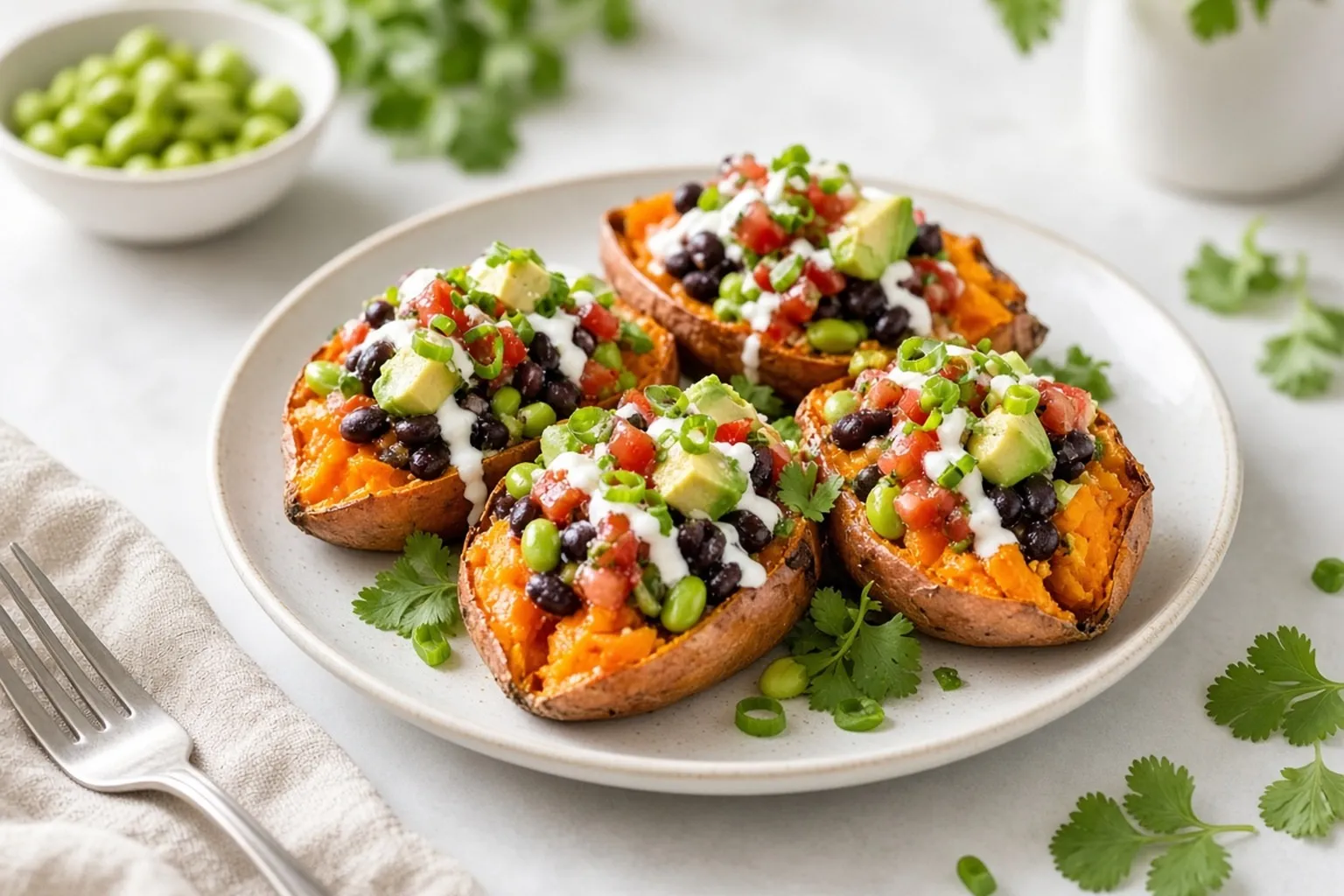
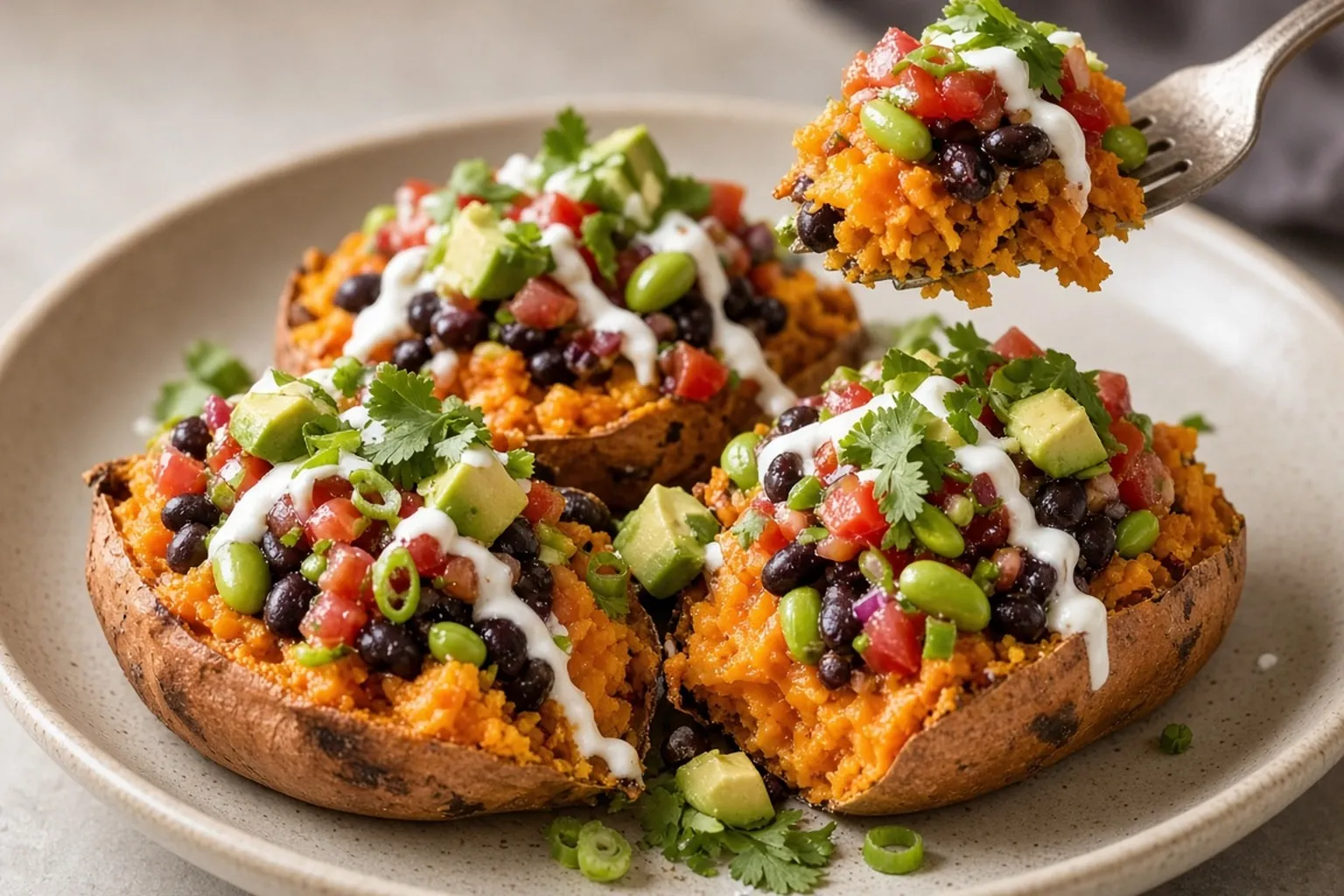
Microwave sweet potato with black beans and edamame
Soft, sweet halves of jacket sweet potato heaped with hot black beans and edamame cooked in salsa, cumin and chilli, then topped with avocado, a cool lime soy-yogurt crema, green onion and coriander. A warm, filling plate in ten minutes from the microwave.
- Time
- 10 min (3 prep + 7 cook)
- Servings
- 2
- Per serving
- 477 kcal
- Protein
- 23 g
Ingredients
- 2 small (7 oz each) sweet potatoes, scrubbed, skin on, halved lengthwise

Beans
- 1 1/2 cups canned black beans, drained and rinsed
- 2/3 cup edamame, frozen shelled
- 6 tbsp salsa, tomato salsa
- 1/2 tsp ground cumin
- 1/2 tsp chili powder
- 1/4 tsp garlic powder


Lime crema
- 1/3 cup unsweetened soy yogurt
- 1 tsp lime juice


- 1/2 small avocado, diced
- 1 green onion, thinly sliced
- a small handful fresh cilantro, coriander leaves


Steps
- Halve the sweet potatoes lengthwise, put them cut side down on a plate, cover with a damp paper towel and microwave on high for 5–6 minutes, until a knife slides in easily.
- Meanwhile heat the black beans, edamame, salsa, cumin, chilli powder and garlic powder in a small saucepan over medium heat for 3–4 minutes, stirring, until steaming.
- Stir the soy yogurt and lime juice together in a cup.
- Turn the sweet potato halves cut side up, fluff the flesh with a fork and spoon the beans over them. Top with the avocado, a drizzle of lime crema, green onion and coriander.
Good to know
My sweet potatoes are bigger. How long do they need?
Large ones (10 oz or more) take 7–9 minutes even halved.
Can I leave out the avocado?
Yes; the crema keeps it creamy, and the plate scores about 67 instead of 64.
Per
- Calories
- 100
- Protein
- (21%)
- 5 g
- Fat
- (21%)
- 2 g
- Carbohydrates
- (58%)
- 16 g
- of which sugar
- 4 g
- Fiber
- 5 g
- Sodium
- 162 mg
More meals


Computed from the ingredients with our published formula, not yet kitchen-tested. How
As written, 955 kcal goes into the pot and 1003 g of ingredients comes out as about 953 g of food: 100 kcal per 100 g. Cooking moves water and energy density is the score's biggest lever, so the dish is scored as cooked, not as an average of its parts. Every ingredient links to its food page, with the same data and score. The label's percentages are each macronutrient's share of the calories. The full formula.