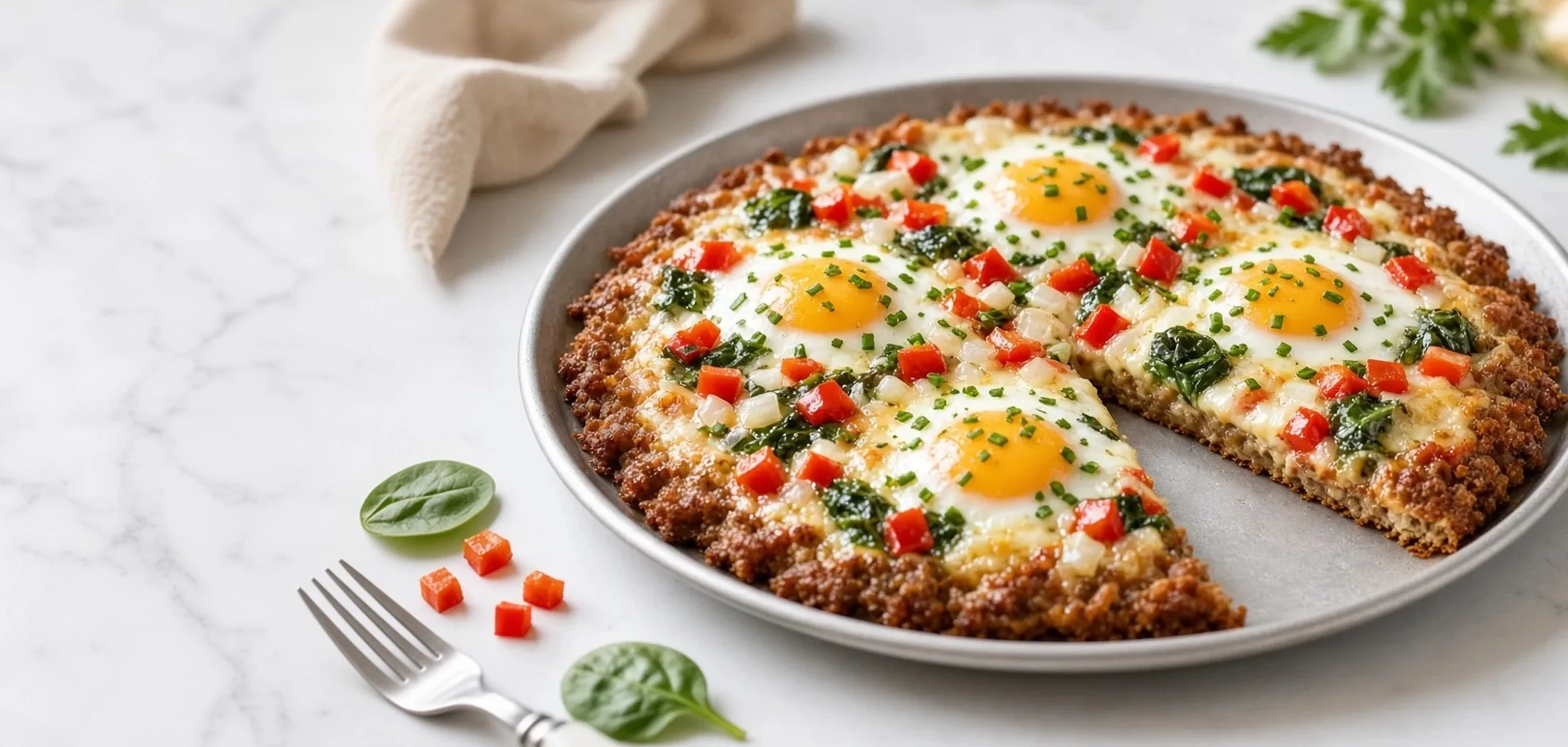
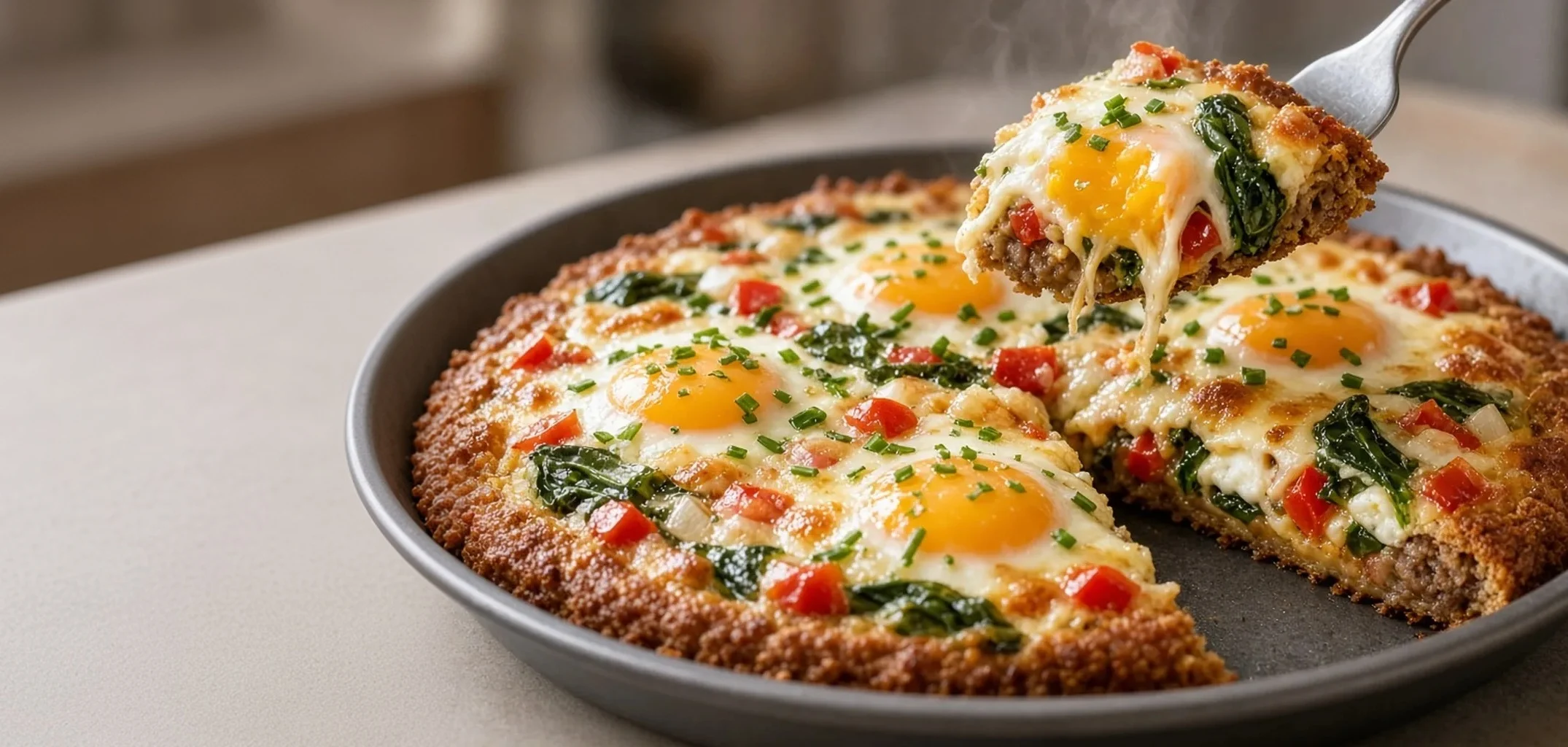
Sausage-crust breakfast pizza
45 min · 36 g protein · 373 cals / serving
A breakfast pizza where the crust is the sausage: seasoned sausage pressed thin and baked crisp, then covered with peppers, spinach and melted mozzarella, with four eggs baked right on top until the whites set and the yolks stay soft. Cut it in wedges like any pizza.
Ingredients
Sausage crust
- 1 lb raw turkey sausage
- 1 large egg
- 1/4 cup grated parmesan
- 1/2 tsp dried sage
- 1/2 tsp garlic powder


- 1 tsp olive oil
- 1/2 small red bell pepper, diced
- 1/4 medium onion, finely diced
- 1 cup baby spinach
- 3/4 cup shredded mozzarella
- 4 large eggs
- 1 pinch salt
- 1/4 tsp black pepper
- 1 tbsp fresh chives, snipped


Steps
- Heat the oven to 400°F. Mix the sausage with the egg, parmesan, sage and garlic powder by hand. Press it in an even layer, about 1/4 inch thick, over a parchment-lined 12 inch pizza pan or a 23 × 33 cm (9 × 13 inch) sheet, leaving a slightly raised rim.
- Bake 15 minutes, until the crust is browned at the edges and cooked through (165°F). Carefully pour or blot off the fat.
- While it bakes, warm the oil in a frying pan over medium heat and cook the pepper and onion 4 minutes, until soft. Add the spinach and stir until just wilted.
- Scatter the vegetables and mozzarella over the crust, leaving four gaps. Crack an egg into each gap and season the eggs with salt and pepper.
- Bake 10–12 minutes more, until the whites are set and the yolks still soft (a minute or two longer for firm yolks). Scatter with chives and cut into 4 wedges, one egg in each.
Good to know
Can I use pork sausage for the crust?
Yes, it is richer and browns a little more, at 32 instead of 53. Pour off the fat well after the first bake.
Can I scramble the eggs instead?
Whisk the four eggs, pour them over the vegetables before the cheese and bake 12–14 minutes, until set in the middle. It slices more neatly for meal prep.
Per
- Calories
- 188
- Protein
- (40%)
- 18 g
- Fat
- (55%)
- 11 g
- Carbohydrates
- (6%)
- 3 g
- of which sugar
- 1 g
- Fiber
- <1 g
- Sodium
- 515 mg
More breakfast


Computed from the ingredients with our published formula, not yet kitchen-tested. How
As written, 1494 kcal goes into the pot and 943 g of ingredients comes out as about 795 g of food: 188 kcal per 100 g. Cooking moves water and energy density is the score's biggest lever, so the dish is scored as cooked, not as an average of its parts. Every ingredient links to its food page, with the same data and score. The label's percentages are each macronutrient's share of the calories. The full formula.