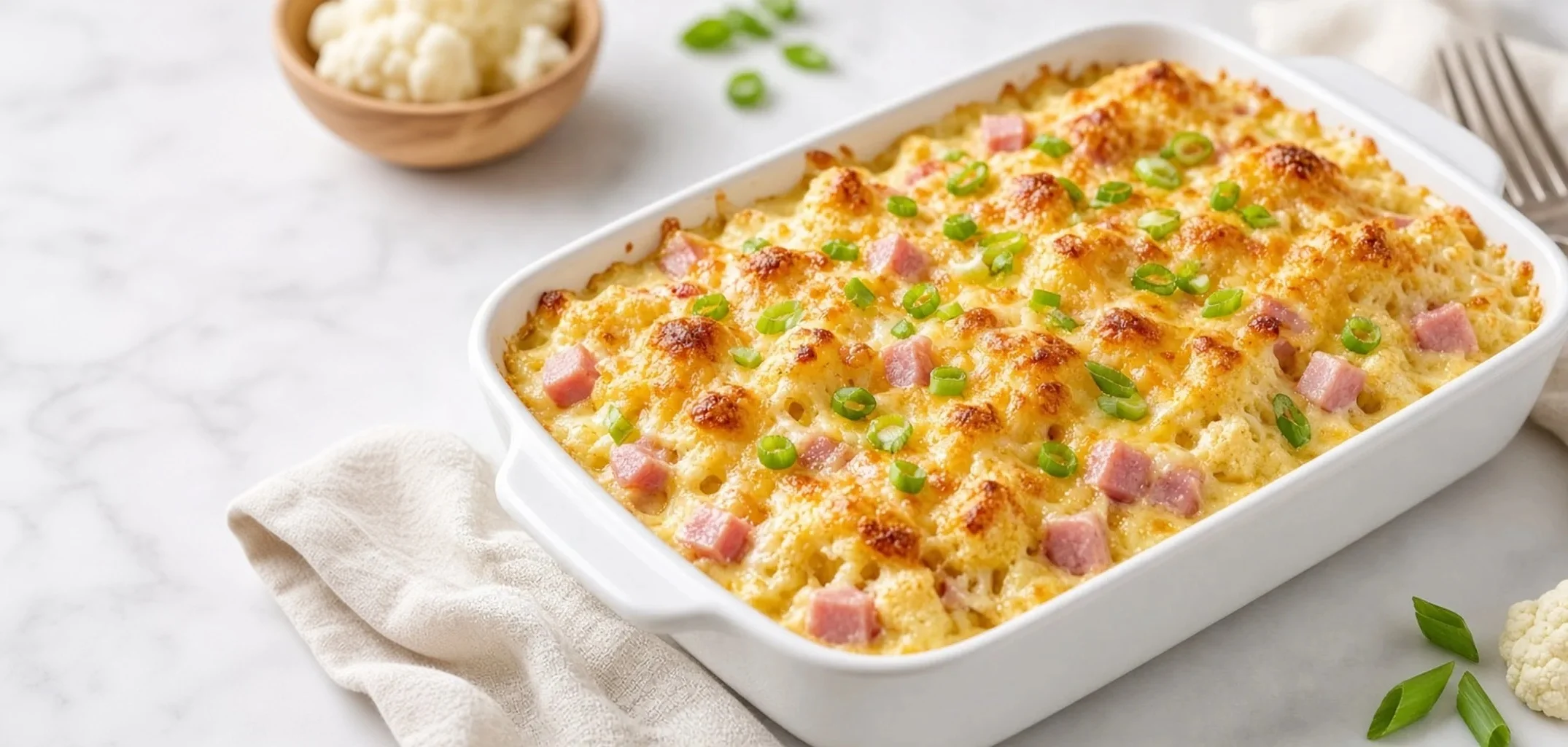
Ham and cauliflower au gratin
65 min · 37 g protein · 428 cals / serving
Roasted cauliflower and smoky diced ham in a creamy cheddar and Dijon sauce, baked until the top is golden and bubbling. A cosy, low-carb take on ham and potatoes au gratin, and a great home for leftover ham.
Ingredients
- 1 large head cauliflower, cut into bite-size florets
- 2 tsp olive oil
- 1/4 tsp salt
- 3 cups diced ham, diced (no added sugar)


Sauce
- 3 oz light cream cheese, softened
- 1/2 cup nonfat Greek yogurt
- 2 tbsp heavy cream
- 2 tsp Dijon mustard
- 1/2 tsp garlic powder
- 1/2 tsp black pepper


- 3/4 cup shredded sharp cheddar cheese, divided
- 1/4 cup grated parmesan
- 2 green onions, sliced


Steps
- Heat the oven to 425°F. Toss the cauliflower with the oil and salt on a lined tray and roast 20 minutes, until just tender and golden at the edges. Lower the oven to 375°F.
- In a large bowl stir the cream cheese, yogurt, cream, Dijon, garlic powder and pepper until smooth. Fold in the cauliflower, the ham and half the cheddar, and spread in a 20 × 30 cm (8 × 12 in) baking dish.
- Scatter with the rest of the cheddar and the parmesan and bake 25–30 minutes, until bubbling and golden on top.
- Rest 5 minutes and scatter with the green onion. Keeps 4 days in the fridge; reheat covered at 350°F or in the microwave.
Good to know
Which ham works best?
Any cooked ham you can dice: leftover baked ham, a ham steak or thick-sliced deli ham. Choose one without a sugary glaze if you are counting carbs closely.
Can I add broccoli?
Yes. Swap half the cauliflower for broccoli florets and roast them together; the score stays about the same.
Per
- Calories
- 119
- Protein
- (36%)
- 10 g
- Fat
- (51%)
- 7 g
- Carbohydrates
- (13%)
- 4 g
- of which sugar
- 2 g
- Fiber
- 1 g
- Sodium
- 532 mg
More meals


Computed from the ingredients with our published formula, not yet kitchen-tested. How
As written, 1711 kcal goes into the pot and 1635 g of ingredients comes out as about 1440 g of food: 119 kcal per 100 g. Cooking moves water and energy density is the score's biggest lever, so the dish is scored as cooked, not as an average of its parts. Every ingredient links to its food page, with the same data and score. The label's percentages are each macronutrient's share of the calories. The full formula.