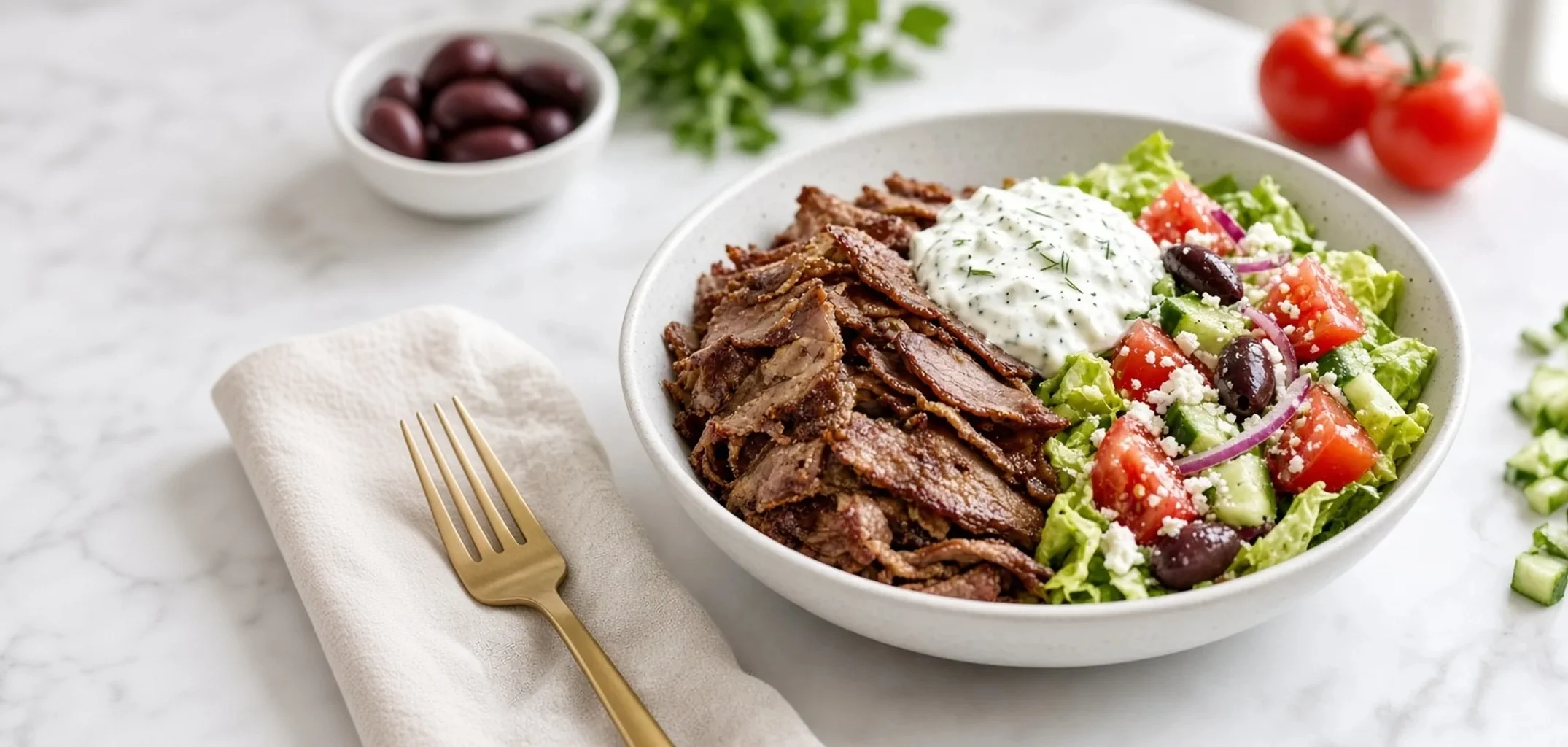
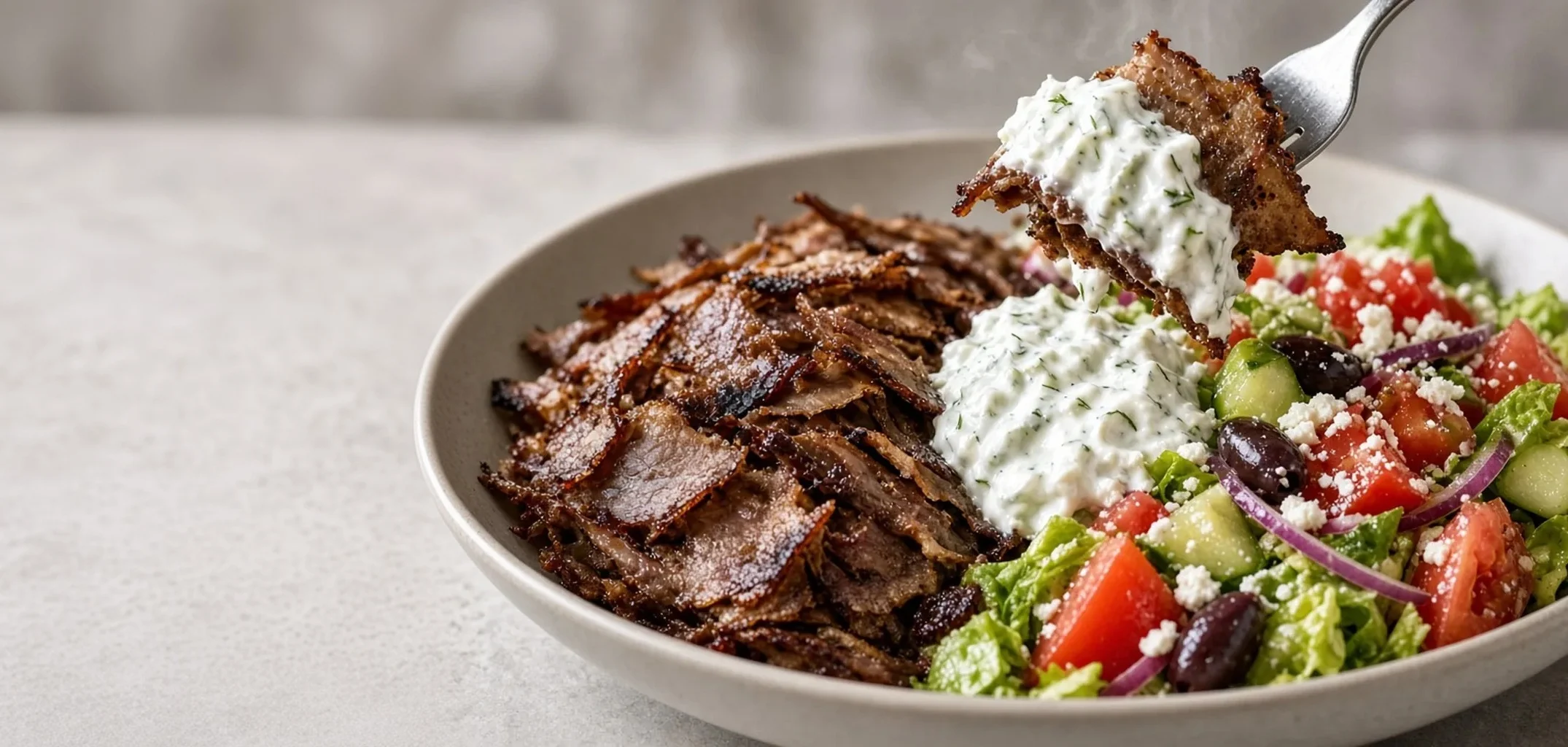
Homemade gyro meat bowls with tzatziki and Greek salad
90 min · 52 g protein · 542 cals / serving
The street-cart gyro at home: lamb and beef blitzed with onion, garlic and oregano, baked as a loaf, sliced thin and crisped in a hot pan. Piled into bowls with a thick garlicky tzatziki and a chunky Greek salad of tomato, cucumber, olives and feta.
Ingredients
Gyro meat
- 10 oz ground lamb
- 1 lb 2 oz ground beef (93% lean)
- 1 small onion, grated and squeezed dry
- 4 cloves garlic
- 1 tbsp dried oregano
- 1 tsp dried marjoram
- 1 tsp ground cumin
- 1 tsp salt
- 1 tsp black pepper


Tzatziki
- 1 cup nonfat Greek yogurt
- 1/3 large cucumber, grated and squeezed
- 1 clove garlic, finely grated
- 2 tsp lemon juice
- 1 tbsp fresh dill, chopped


Greek salad
- 1 1/2 medium tomatoes, cut in wedges
- 1/2 large cucumber, in chunks
- 1 small heart romaine lettuce, chopped
- a few thin slices red onions, thinly sliced
- 3 oz feta cheese, crumbled
- 1 tbsp olive oil
- 2 tsp red wine vinegar


Steps
- Heat the oven to 325°F. Blitz the squeezed onion, garlic, oregano, marjoram, cumin, salt and pepper in a food processor to a paste.
- Add the lamb and beef and process for about a minute, until the mixture is smooth, sticky and pale. This is what gives gyro meat its fine, sliceable texture.
- Press the mixture into a loaf tin, set it in a roasting pan with hot water poured round it, and bake 45–50 minutes, until the centre reads 160°F. Pour off the fat, rest 10 minutes, then slice as thinly as you can.
- While it bakes, stir the yogurt, grated cucumber, garlic, lemon juice and dill together and chill.
- Toss the tomato, cucumber, lettuce, red onion and olives with the oil and vinegar, and crumble the feta over.
- Sear the gyro slices in a dry, very hot frying pan in batches, about 1 minute a side, until crisp at the edges. Divide the salad between four bowls, pile the meat on and spoon on the tzatziki.
Good to know
Can I make it with all beef?
Yes, and many gyro shops do. Use all 93 % lean beef and the bowl scores 65 instead of 58; it is a little firmer and less rich.
Can I cook the loaf ahead?
Yes. Bake it, chill it whole, and slice it cold, which is easier anyway. Crisp the slices in the pan just before serving.
Per
- Calories
- 135
- Protein
- (39%)
- 13 g
- Fat
- (51%)
- 7 g
- Carbohydrates
- (9%)
- 3 g
- of which sugar
- 2 g
- Fiber
- 1 g
- Sodium
- 263 mg
More meals


Computed from the ingredients with our published formula, not yet kitchen-tested. How
As written, 2169 kcal goes into the pot and 1949 g of ingredients comes out as about 1605 g of food: 135 kcal per 100 g. Cooking moves water and energy density is the score's biggest lever, so the dish is scored as cooked, not as an average of its parts. Every ingredient links to its food page, with the same data and score. The label's percentages are each macronutrient's share of the calories. The full formula.