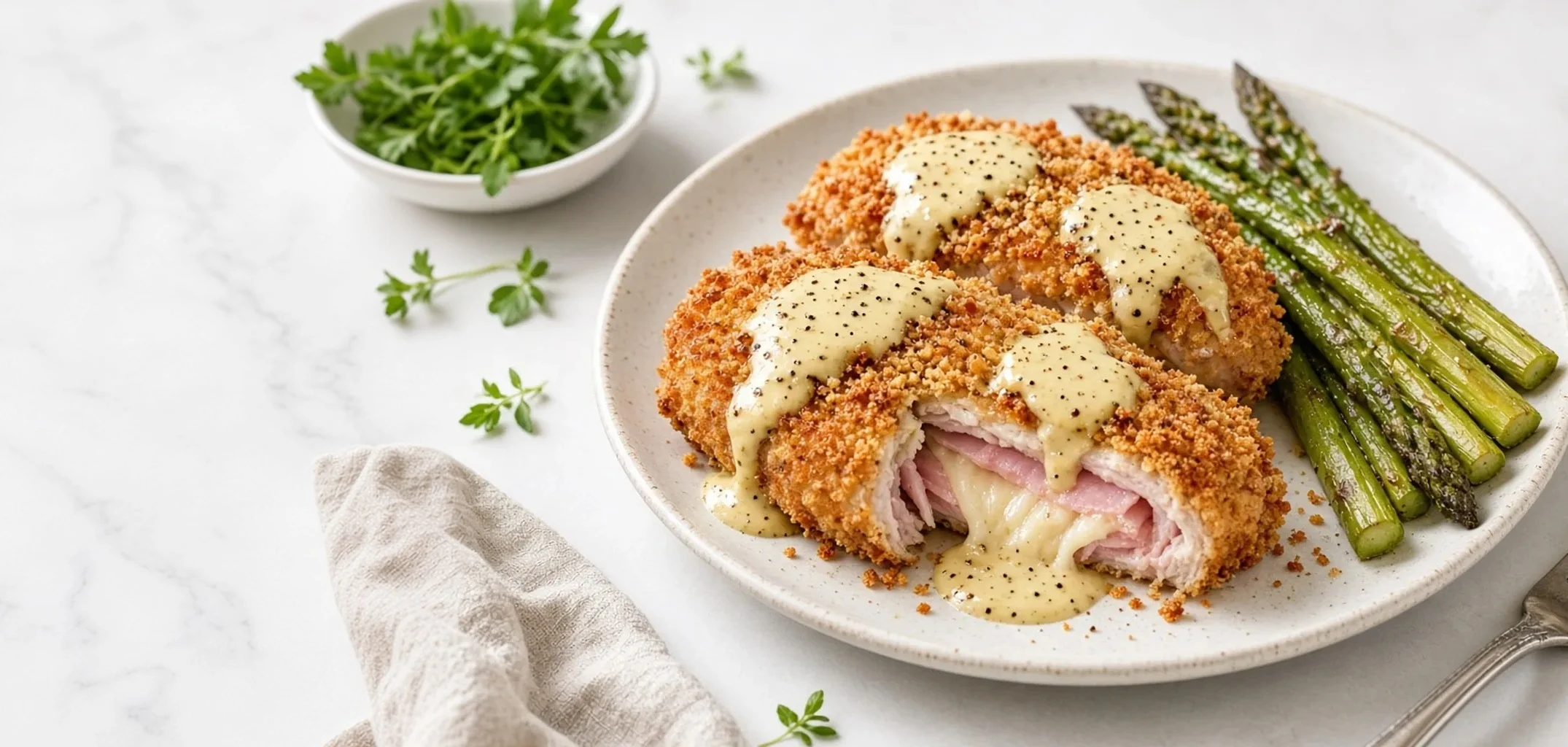
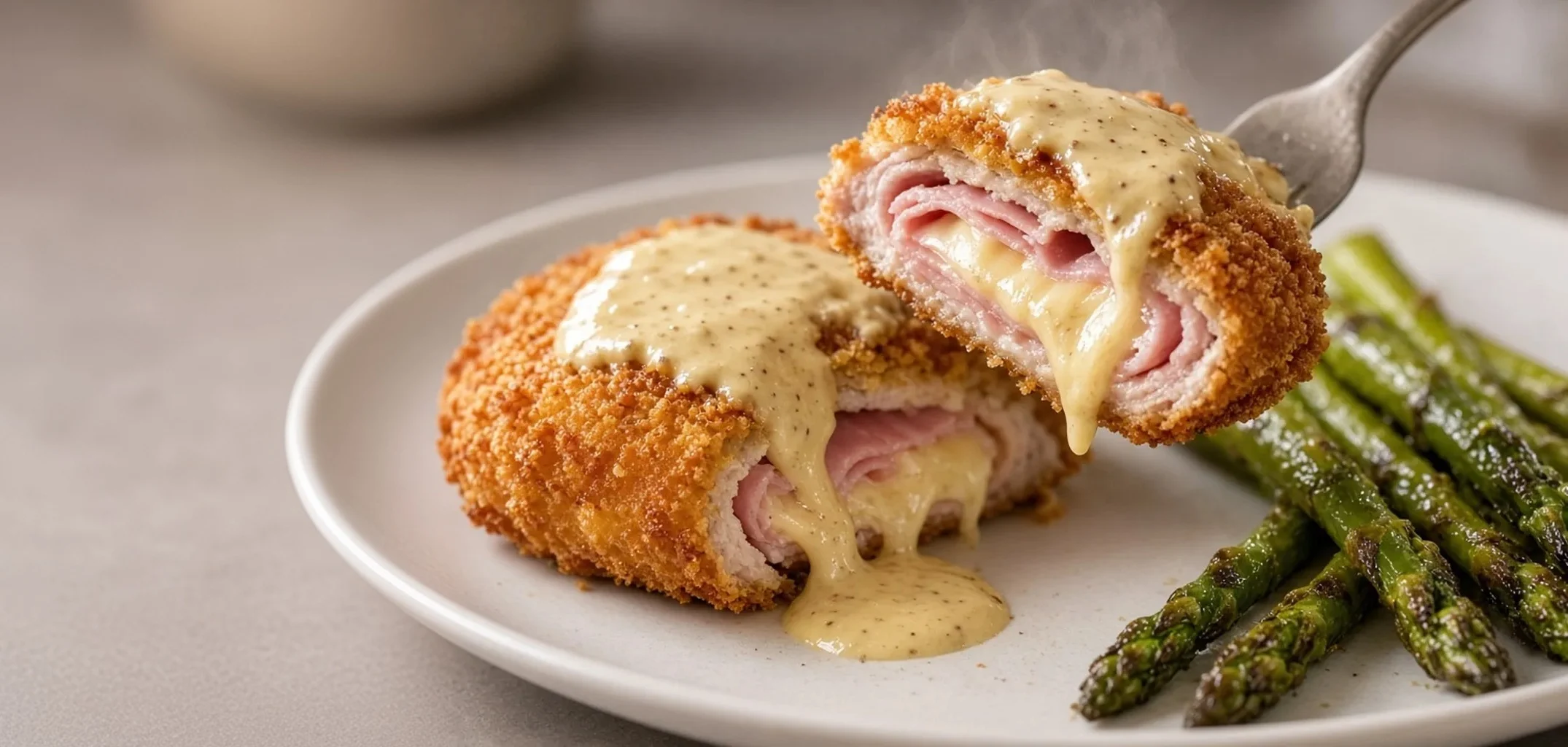
Pork chop cordon bleu with asparagus
50 min · 68 g protein · 608 cals / serving
Thick pork chops with a pocket full of ham, melting Swiss cheese and Dijon, topped with a crisp parmesan crumb and baked beside asparagus, then finished with a quick, tangy Dijon cream sauce. All the comfort of cordon bleu with no breadcrumbs or frying.
Ingredients
- 4 boneless chops, 1 1/4 inch thick (1 3/4 lb) center-cut pork chop, each cut with a deep pocket in the side
- 1/2 tsp salt
- 1/2 tsp black pepper


Filling
- 1 tbsp Dijon mustard
- 4 thin slices (4 oz) ham
- 4 slices (3 oz) Swiss cheese


Crumb
- 1/2 large egg, beaten
- 1 cup crushed pork rinds
- 1/4 cup grated parmesan


Dijon cream sauce
- 2 tsp butter
- 1 clove garlic, minced
- 1/2 cup chicken broth
- 1/2 cup half and half
- 1 tbsp Dijon mustard
- 2 tbsp grated parmesan


Steps
- Heat the oven to 400°F and line a large baking tray. Season the chops inside and out with the salt and pepper.
- Spread the inside of each pocket with a little of the first measure of Dijon, then tuck in a folded slice of ham and a slice of Swiss. Press the edges together and close with a toothpick if needed.
- Brush the tops of the chops with beaten egg, then press on the mixed pork-rind crumbs and parmesan. Set them on the tray.
- Toss the asparagus with the oil and a pinch of salt and lay it around the chops. Bake 22–25 minutes, until the crumb is golden, the cheese is melting out at the edges and the pork reaches 145°F in the thickest part. Rest 5 minutes and remove any toothpicks.
- While the chops bake, melt the butter in a small pan over medium heat, add the garlic for 30 seconds, then the broth and half-and-half. Simmer 5 minutes until slightly thickened, then whisk in the second measure of Dijon and the parmesan. Spoon over the chops and serve with the asparagus.
Good to know
How do I cut a pocket in a chop?
Lay the chop flat and, with a small sharp knife, cut into the fat side, sweeping inside to make a deep pocket while keeping the opening narrow.
Can I use reduced-fat Swiss?
Yes, it melts a little less but tastes the same. The dish scores 67 instead of 62.
Per
- Calories
- 167
- Protein
- (45%)
- 19 g
- Fat
- (50%)
- 9 g
- Carbohydrates
- (5%)
- 2 g
- of which sugar
- 1 g
- Fiber
- 1 g
- Sodium
- 349 mg
More meals


Computed from the ingredients with our published formula, not yet kitchen-tested. How
As written, 2433 kcal goes into the pot and 1782 g of ingredients comes out as about 1460 g of food: 167 kcal per 100 g. Cooking moves water and energy density is the score's biggest lever, so the dish is scored as cooked, not as an average of its parts. Every ingredient links to its food page, with the same data and score. The label's percentages are each macronutrient's share of the calories. The full formula.