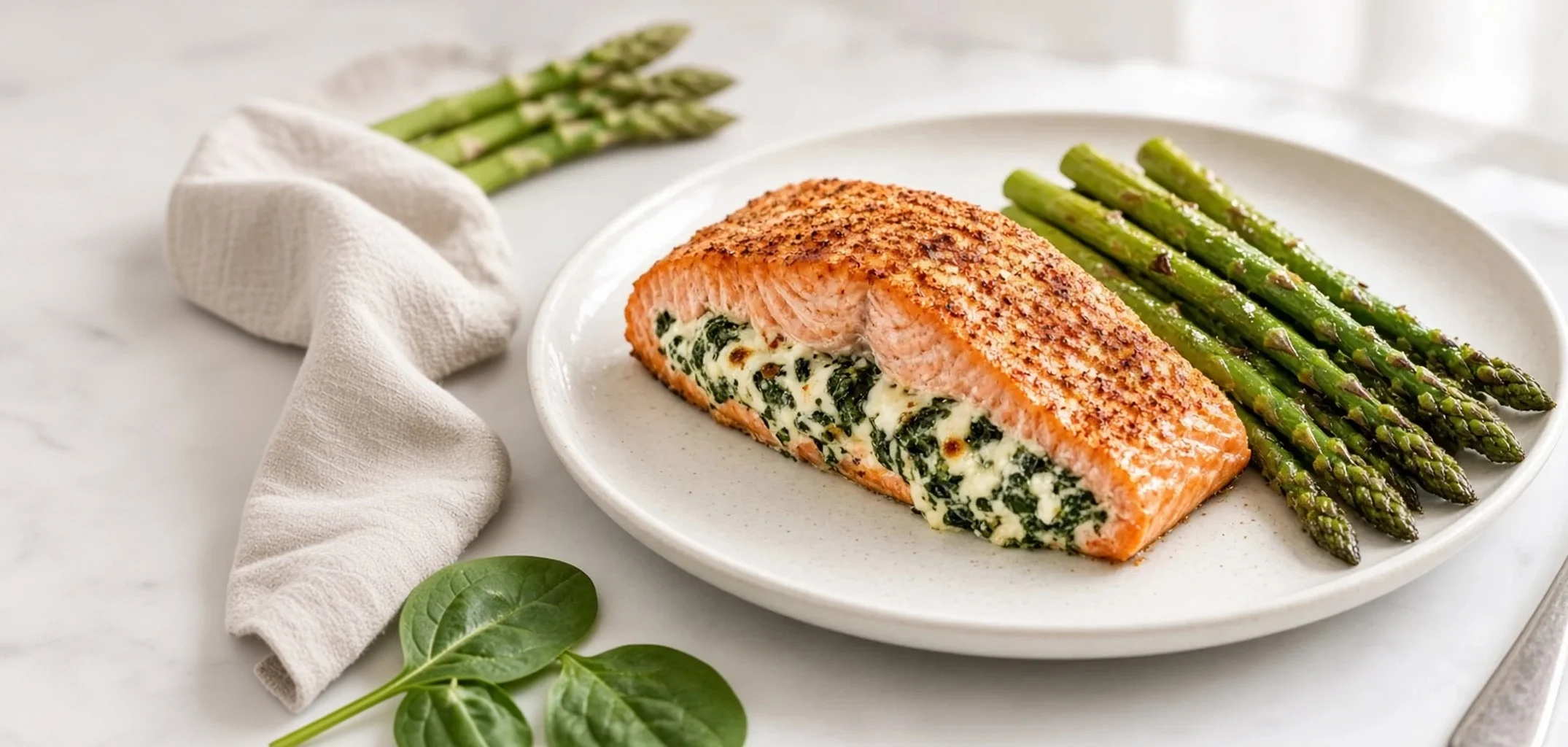
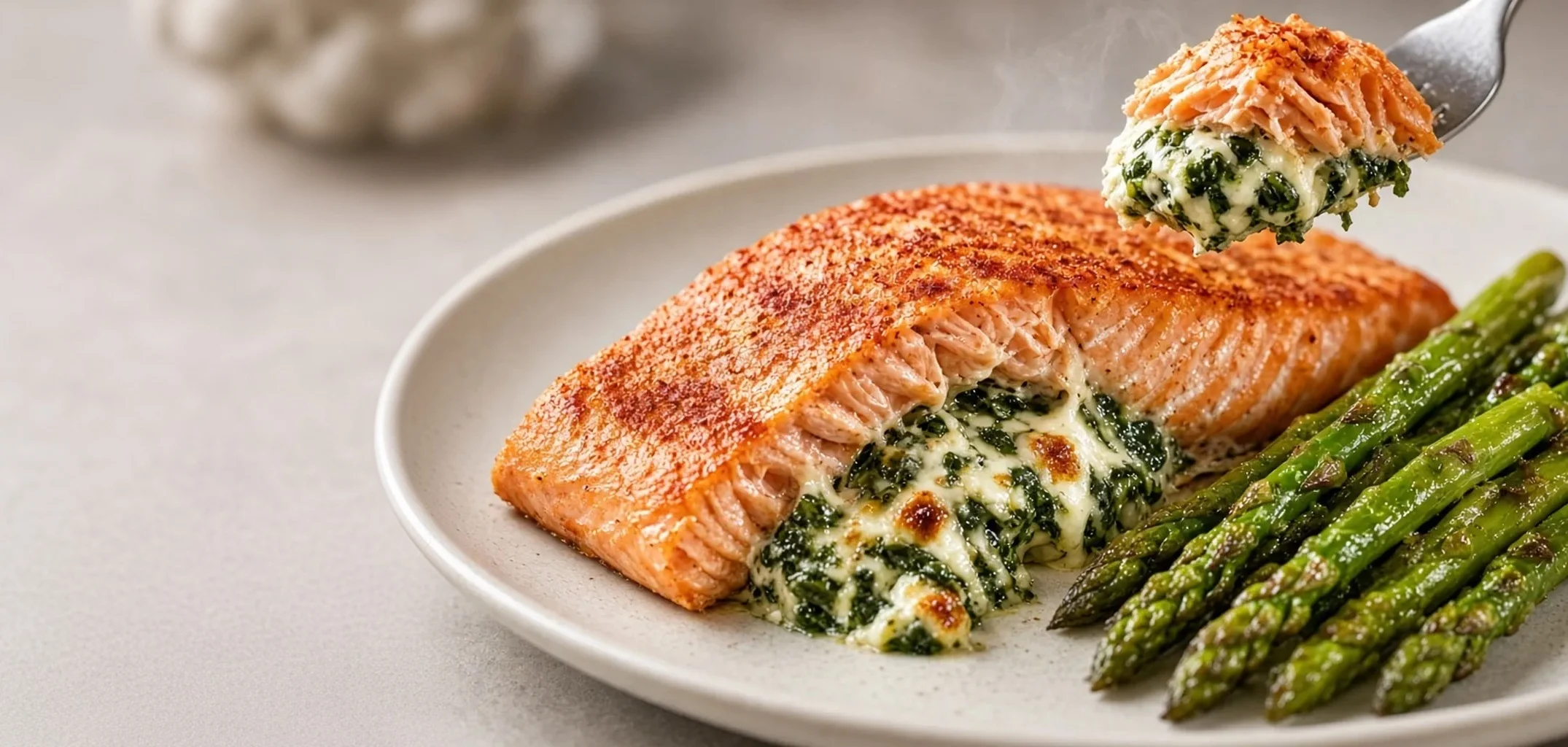
Spinach and cream cheese stuffed salmon
37 min · 45 g protein · 485 cals / serving
Thick salmon fillets cut open into a pocket and packed with a garlicky, cheesy spinach filling, then roasted on a tray with asparagus until the fish is just flaky and the filling bubbles at the edges. Looks like a restaurant plate, takes under 40 minutes.
Ingredients
Filling
- 7 oz (6 big handfuls) baby spinach
- 2 cloves garlic, minced
- 2 oz light cream cheese, soft
- 1/3 cup grated mozzarella cheese
- 1/4 cup grated parmesan
- 1 tsp lemon zest
- a pinch red pepper flakes


Steps
- Heat the oven to 400°F. Wilt the spinach with the garlic in a dry frying pan over medium heat, 2 minutes, then tip into a sieve and press out as much water as you can.
- Chop the spinach and mix it with the cream cheese, mozzarella, parmesan, lemon zest and chilli flakes.
- Cut a deep pocket along the side of each fillet, stopping about 1 cm short of the ends and the far side. Spoon in the filling and press the opening closed. Lay the fillets on a lined baking tray and season the tops with paprika, salt and pepper.
- Toss the asparagus with the oil and a pinch of salt and arrange it around the salmon. Roast for 16–20 minutes, until the salmon flakes easily and is opaque in the thickest part (145°F) and the filling is hot and bubbling. Serve with lemon wedges.
Good to know
My fillets are thin. Can I still stuff them?
Yes: instead of a pocket, spread the filling over one thin fillet and lay a second on top, or roll a long thin piece around the filling and secure it with a toothpick. Check it a few minutes earlier.
Can I make the filling ahead?
Yes, up to a day ahead in the fridge. Stuff the fish just before it goes in the oven.
Per
- Calories
- 155
- Protein
- (38%)
- 14 g
- Fat
- (55%)
- 9 g
- Carbohydrates
- (7%)
- 3 g
- of which sugar
- 1 g
- Fiber
- 1 g
- Sodium
- 184 mg
More meals


Computed from the ingredients with our published formula, not yet kitchen-tested. How
As written, 1940 kcal goes into the pot and 1634 g of ingredients comes out as about 1255 g of food: 155 kcal per 100 g. Cooking moves water and energy density is the score's biggest lever, so the dish is scored as cooked, not as an average of its parts. Every ingredient links to its food page, with the same data and score. The label's percentages are each macronutrient's share of the calories. The full formula.