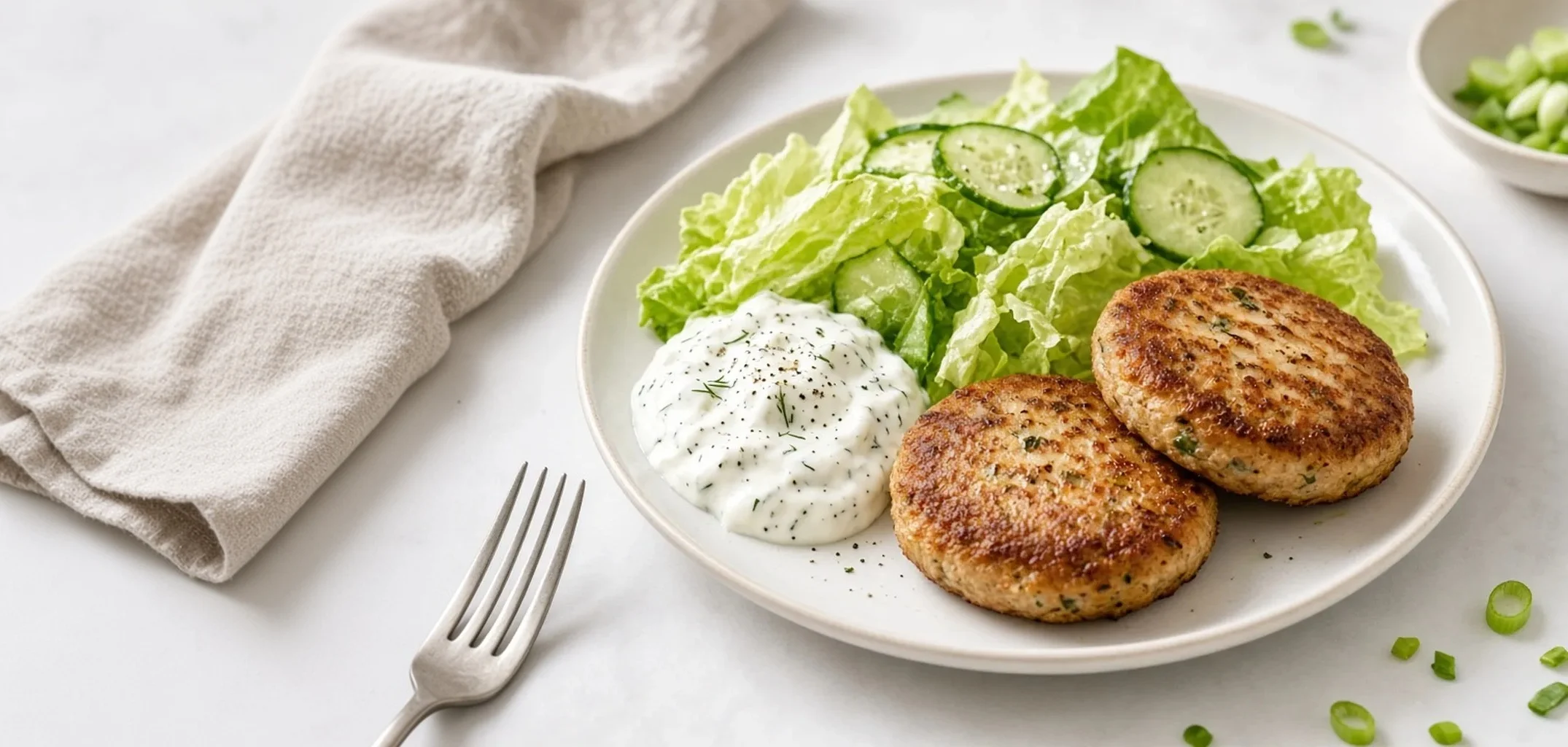
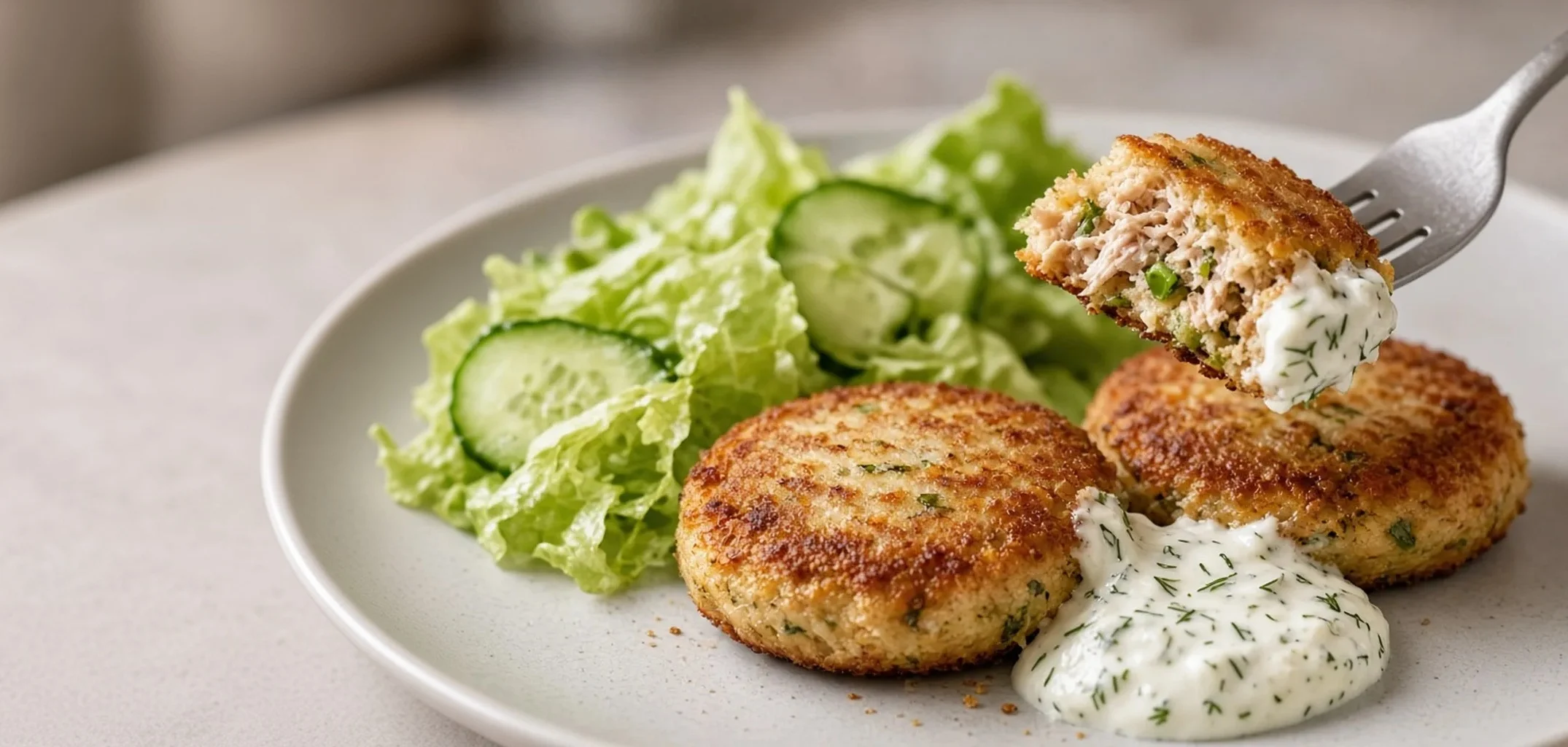
Low-carb tuna patties with lemon-dill sauce
31 min · 36 g protein · 340 cals / serving
Crisp, golden tuna patties made from pantry tins, bound with egg, almond flour and parmesan and flecked with green onion and lemon, served with a cool lemon-dill yogurt sauce and a soft butter lettuce salad. Ready in about 30 minutes and good cold in a lunch box.
Ingredients
Tuna patties
- 4 cans (5 oz each), drained canned tuna, drained very well and flaked
- 2 large eggs
- 1 large egg white
- 1/3 cup almond flour
- 1/3 cup grated parmesan
- 2 tbsp light mayonnaise
- 2 tsp Dijon mustard
- 3 green onions, thinly sliced
- 1 tsp lemon zest
- a few grinds black pepper


- 1 tbsp olive oil

Lemon-dill sauce
- 2/3 cup nonfat Greek yogurt
- 1 tbsp lemon juice
- 1 1/2 tbsp fresh dill, chopped


Salad
- 1 head butterhead lettuce, leaves torn
- 1/2 large cucumber, sliced
- 2 tsp red wine vinegar
- 1 tsp olive oil


Steps
- Squeeze as much water from the tuna as you can, then mix it in a bowl with the eggs, egg white, almond flour, parmesan, mayonnaise, Dijon, green onion, lemon zest and pepper until it holds together. Shape into 8 patties about 2 cm thick and chill for 10 minutes if you have time; they hold together better.
- Heat the oil in a large non-stick frying pan over medium heat and fry the patties, in two batches if they crowd, for 3–4 minutes a side, turning once with a thin spatula, until deep golden and hot all the way through (the egg in the middle should be set, 160°F).
- Stir the yogurt, lemon juice and dill together with a pinch of salt. Toss the lettuce and cucumber with the vinegar and oil. Serve two patties each with the salad and a spoon of sauce.
Good to know
My patties fell apart. How do I fix that?
Drain the tuna really well, chill the patties before frying and do not flip them until the first side is golden and firm. If the mix still feels loose, add another egg white rather than more almond flour.
Can I use canned salmon?
Yes, use the same weight of drained, flaked canned salmon, bones and skin removed or mashed in. The patties get richer and score a little lower (67 → 63).
Per
- Calories
- 106
- Protein
- (44%)
- 11 g
- Fat
- (47%)
- 5 g
- Carbohydrates
- (9%)
- 3 g
- of which sugar
- 1 g
- Fiber
- 1 g
- Sodium
- 171 mg
More meals


Computed from the ingredients with our published formula, not yet kitchen-tested. How
As written, 1361 kcal goes into the pot and 1301 g of ingredients comes out as about 1280 g of food: 106 kcal per 100 g. Cooking moves water and energy density is the score's biggest lever, so the dish is scored as cooked, not as an average of its parts. Every ingredient links to its food page, with the same data and score. The label's percentages are each macronutrient's share of the calories. The full formula.