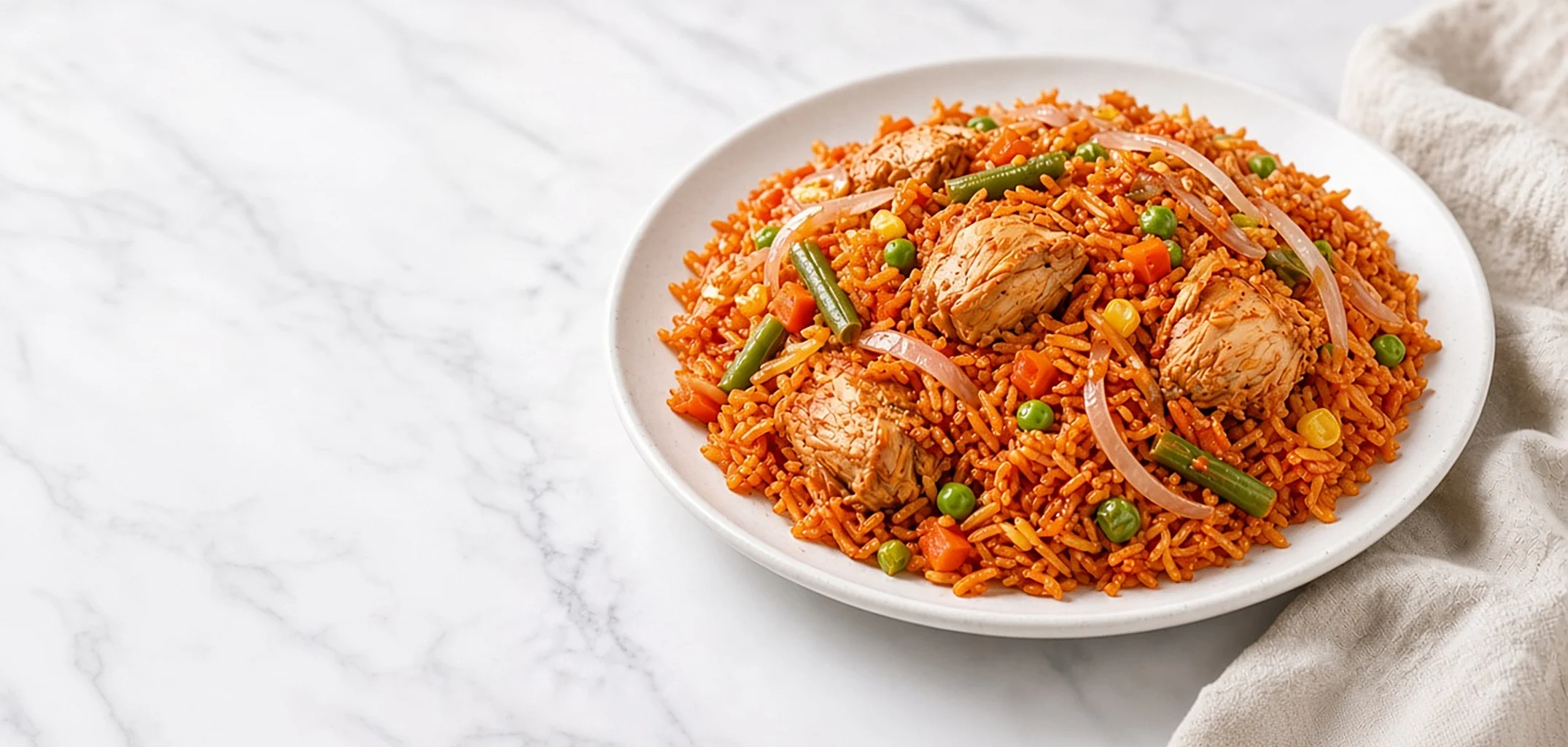
One-pot chicken jollof rice
50 min · 56 g protein · 612 cals / serving
West Africa's party rice as a weeknight one-pot: a blended base of red pepper, tomatoes, onion, ginger and a little scotch bonnet, fried with tomato paste and boiled down until brick red, with chunks of chicken simmering in it, then the rice steamed in it with curry powder, thyme and bay. Mixed vegetables steam on top for the last minutes. Mild enough for children, and enough for dinner for two and tomorrow's lunch for two.
Ingredients
- 1 3/4 lb chicken breast, boneless, skinless, in large chunks
- 2 tsp curry powder, divided
- 2 tsp dried thyme, divided
- 1 1/2 tsp salt, divided


Pepper base
- 1 large red bell pepper, roughly chopped
- 1 can (14 oz) diced tomatoes, plum or diced
- 1 large onion, half roughly chopped, half thinly sliced
- 1 tbsp ginger, chopped
- 3 cloves garlic
- 1/2 scotch bonnet red chili pepper, seeded (or a pinch of cayenne; leave it out for children)


- 1 cup basmati rice, long-grain basmati, uncooked (for parboiled rice, add 1/4 cup water and 5 minutes)
- 4 cups frozen mixed vegetables mixed vegetables, peas, carrots, corn and green beans
- 1 tbsp canola oil
- 3 tbsp tomato paste
- 1 tsp paprika
- 2 bay leaf
- 1/2 tsp black pepper
- 1/4 cup chicken broth, to rinse out the blender


Steps
- Toss the chicken with 1 teaspoon each of the curry powder and thyme and 1/2 teaspoon of the salt.
- Blend the red pepper, tomatoes, the roughly chopped half of the onion, the ginger, garlic and scotch bonnet until smooth. Rinse the rice in a sieve until the water runs clear and leave it to drain. Put the frozen vegetables in a colander and run warm water over them to thaw, then drain well.
- Heat the oil in a large, wide pot with a tight lid over medium-high heat and cook the sliced onion 3 minutes until soft. Stir in the tomato paste and fry it 2 minutes, stirring, until it darkens to brick red: this is where jollof's deep flavour comes from.
- Pour in the blended base, add the chicken with the rest of the curry powder, thyme and salt, the paprika, bay leaves and pepper, and boil hard, stirring often, 10 minutes, until the base has reduced by about half, looks thick and glossy and the oil shows at the edges. The chicken poaches in it as it reduces. Taste the sauce for salt.
- Swirl the stock round the blender jar and pour it in, then stir in the rice and push the chicken down into it. Bring back to a boil, cover tightly (a sheet of foil under the lid helps), turn the heat to low and cook 15 minutes without stirring. Scatter the thawed vegetables on top, cover again and cook 5 minutes more, until the rice is tender, the liquid is absorbed and the chicken is 165°F inside.
- Leave it covered off the heat for 3 minutes, then fork the rice and vegetables together and pick out the bay leaves. For lunches, spread the leftovers in shallow containers so the rice cools fast and refrigerate within an hour; it keeps 3 days, reheated once until steaming hot.
Good to know
Is it spicy?
Half a seeded scotch bonnet across four servings reads as warm, not hot, which is how most family jollof is made. For the full party heat, blend in a whole one with its seeds; for children, leave it out and put hot sauce on the table.
Why does the bottom catch?
Jollof is steamed, not boiled, so the heat must be really low once the lid goes on. A little smoky crust on the bottom (the 'party' bit) is prized; a burnt one means the heat was too high or the lid let the steam out.
Can I use chicken thighs?
Yes, boneless thighs are the more traditional cut and stay juicier through the week, at about 50 instead of 58. Cut them in large chunks and brown them the same way.
Per
- Calories
- 121
- Protein
- (37%)
- 11 g
- Fat
- (17%)
- 2 g
- Carbohydrates
- (46%)
- 15 g
- of which sugar
- 3 g
- Fiber
- 2 g
- Sodium
- 282 mg
More meals


Computed from the ingredients with our published formula, not yet kitchen-tested. How
As written, 2447 kcal goes into the pot and 2466 g of ingredients comes out as about 2015 g of food: 121 kcal per 100 g. Cooking moves water and energy density is the score's biggest lever, so the dish is scored as cooked, not as an average of its parts. Every ingredient links to its food page, with the same data and score. The label's percentages are each macronutrient's share of the calories. The full formula.